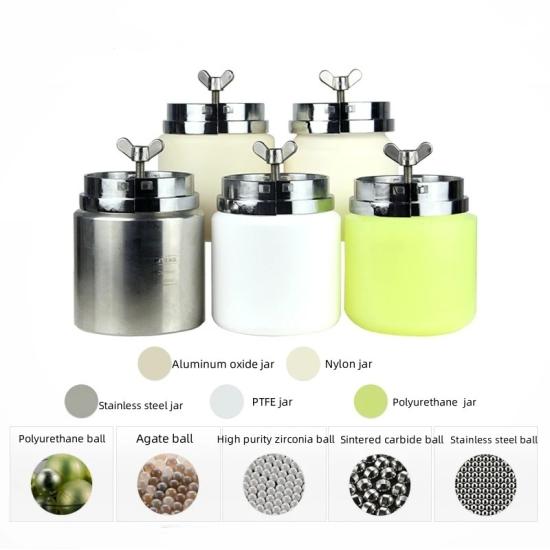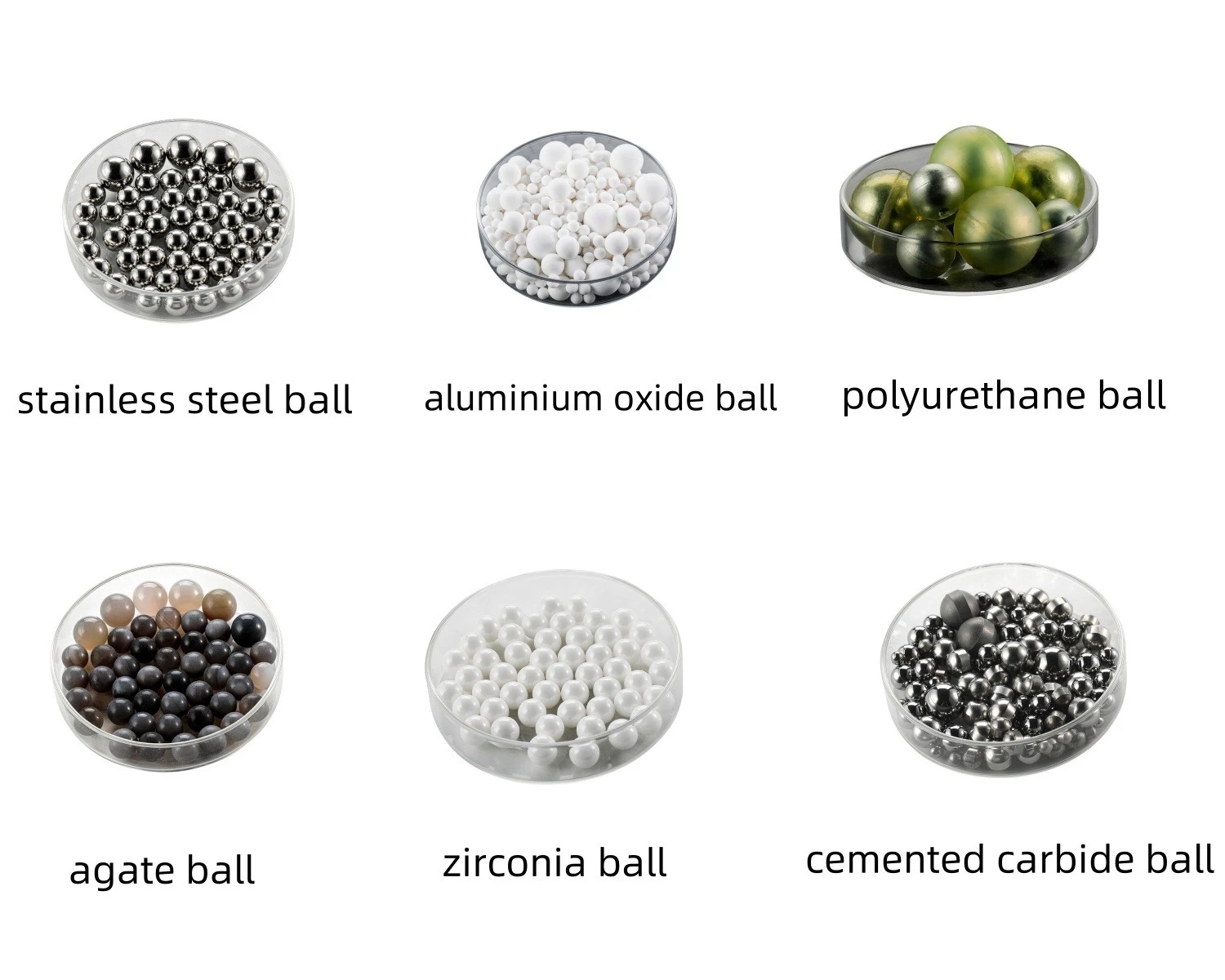
Grinding balls are the media that move inside the ball mill jar to crush and grind the sample. Because they directly determine grinding efficiency and sample purity, the ball material must be selected according to the material being ground and the jar in use. Stainless steel, alumina, agate, zirconia, tungsten carbide and polyurethane options differ in hardness, density and contamination risk.
| Ball Material | Compatible Jar | Key Property |
| Stainless Steel | Stainless steel jar | Economical, general purpose; possible metal contamination |
| Alumina (Al₂O₃) | Alumina, nylon, PTFE jar | No metal contamination, medium hardness |
| Agate | Agate, polyurethane, nylon, PTFE jar | High purity, contamination-sensitive samples |
| Zirconia (ZrO₂) | Alumina, zirconia, polyurethane, nylon, PTFE jar | High density, fast and fine grinding |
| Tungsten Carbide | Tungsten carbide, stainless steel jar | Highest hardness, very hard materials |
| Polyurethane | Polyurethane, silicon carbide jar | Soft, very low wear contamination |


 Türkçe
 Engilish