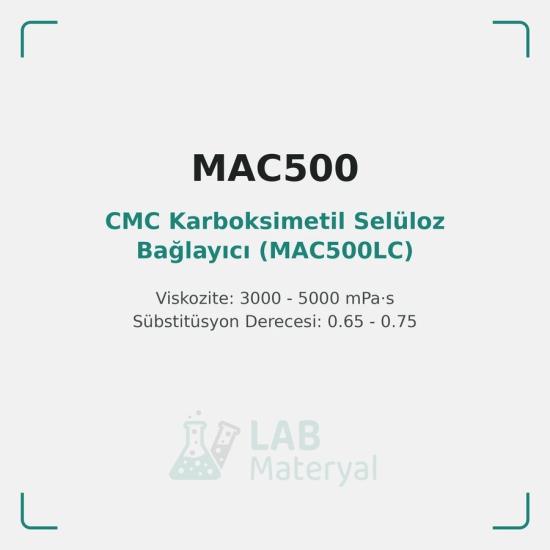
A cellulose derivative used together with SBR in water-based anode electrodes. CMC's primary function is rheology control rather than binding: it adjusts slurry viscosity and prevents graphite particles from settling, maintaining a homogeneous suspension. Its degree of substitution of 0.80-0.90 indicates high water solubility.
Key Features
- Rheology control that adjusts slurry viscosity and prevents settling
- High degree of substitution of 0.80-0.90, indicating high water solubility
- Forms a balanced binder system when used together with SBR
Technical Specifications
| Degree of Substitution |
0.80 - 0.90 |
| Viscosity |
2200 - 4000 mPa·s |
| pH |
6.5 - 8.0 |
Applications
- Water-based graphite anode electrode formulations
- Studies on slurry rheology and suspension stability
- CMC/SBR binder system optimization
No questions have been asked for this product yet.


 Türkçe
 Engilish