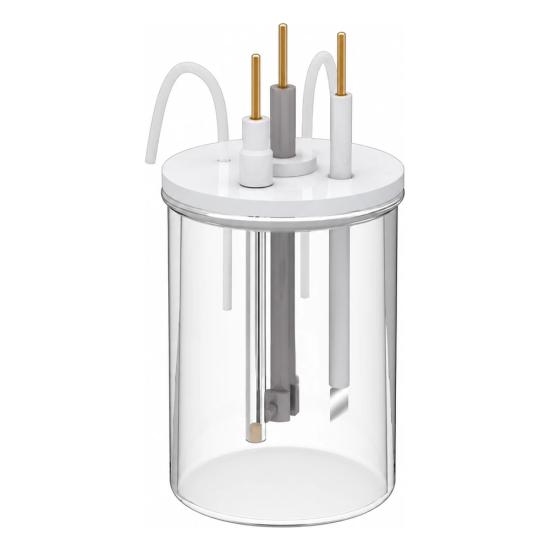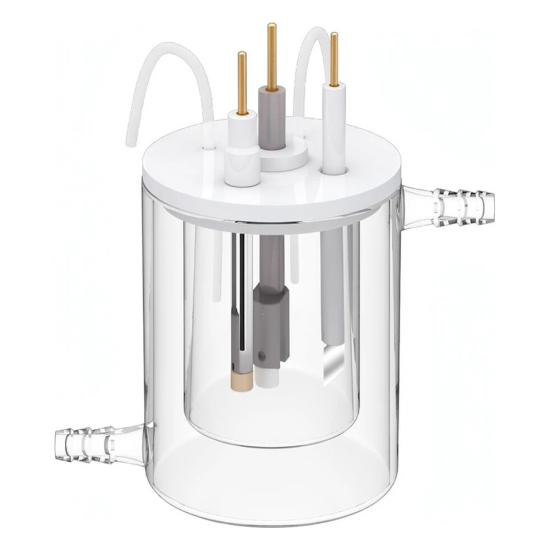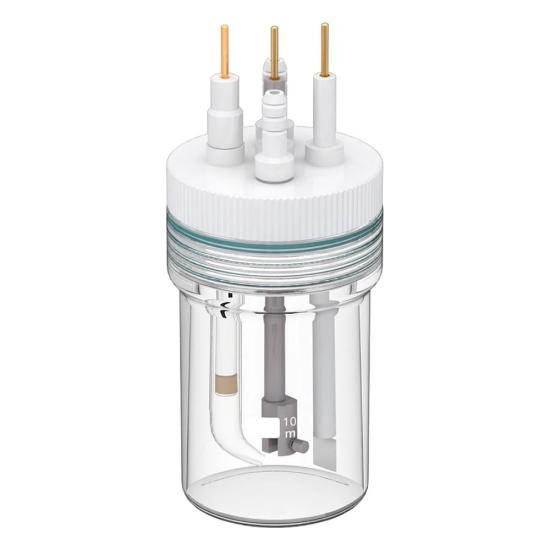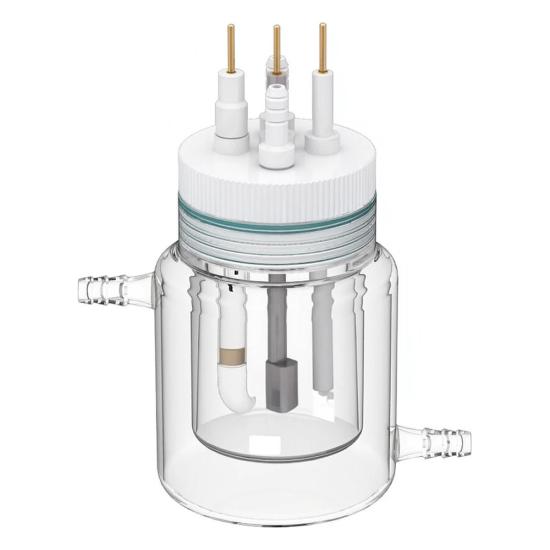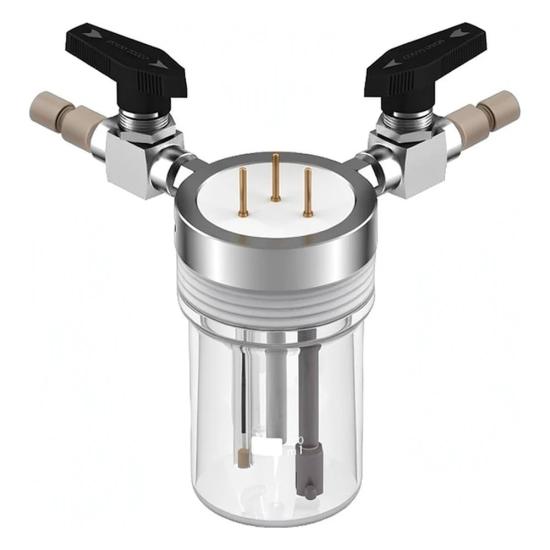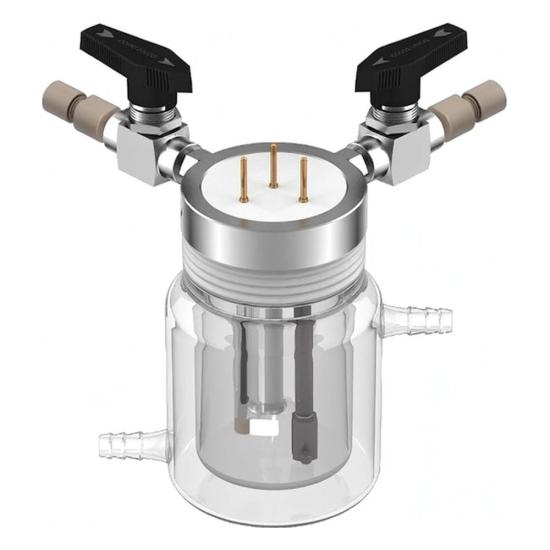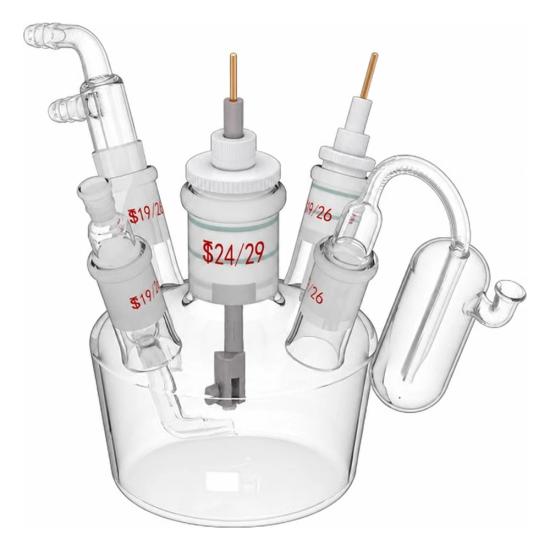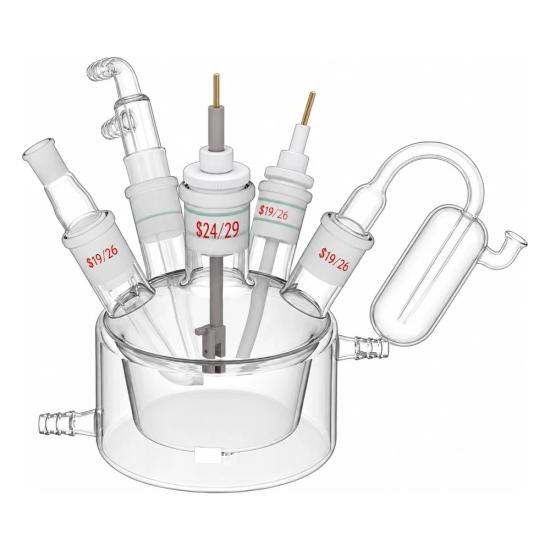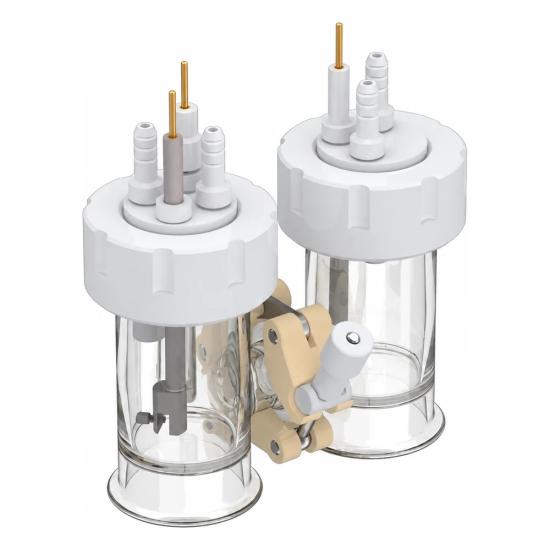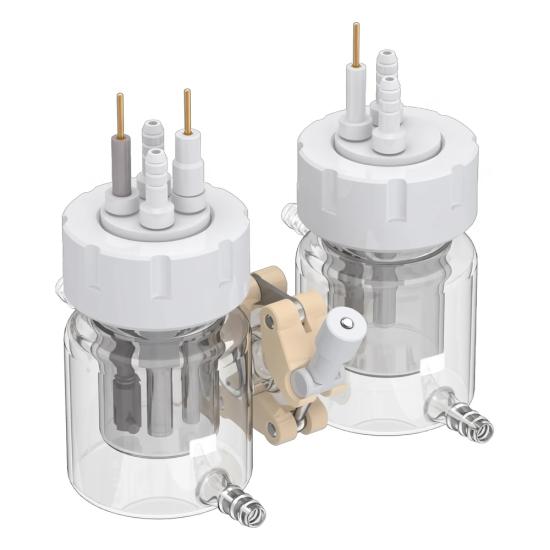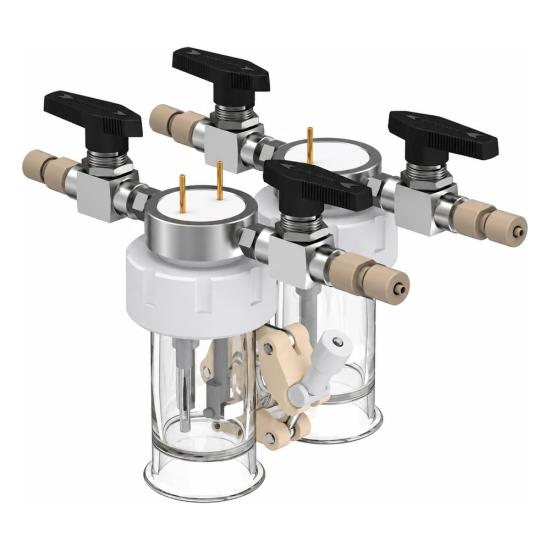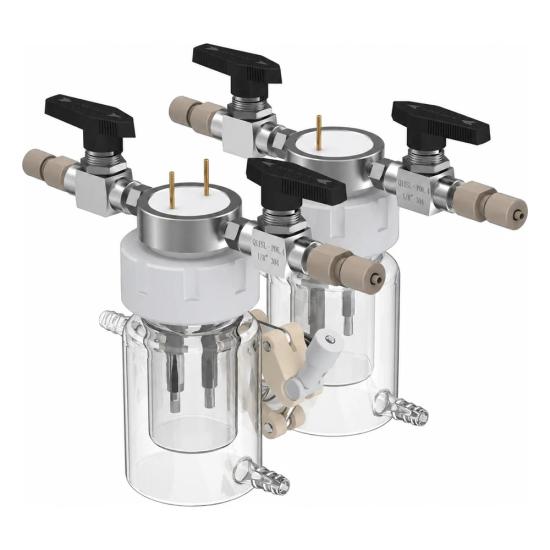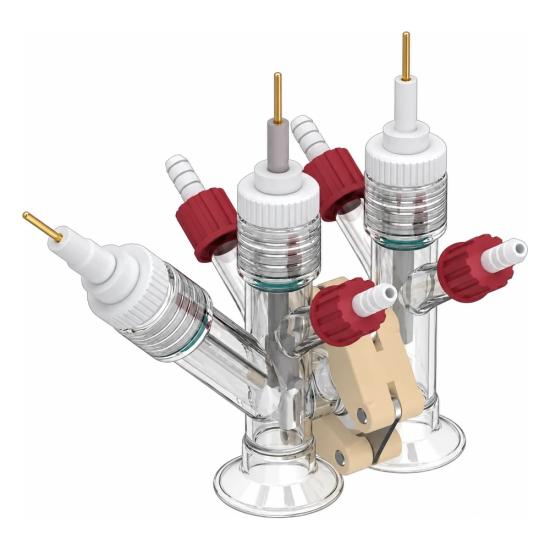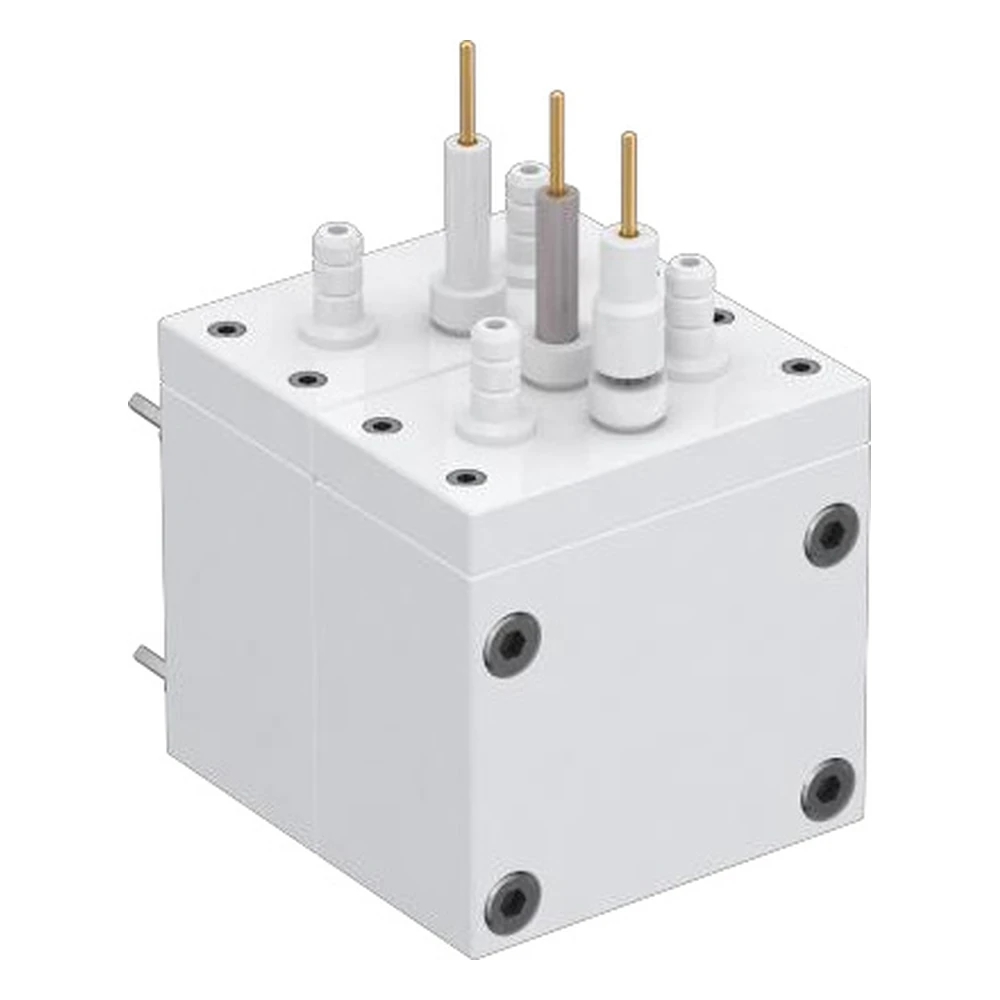
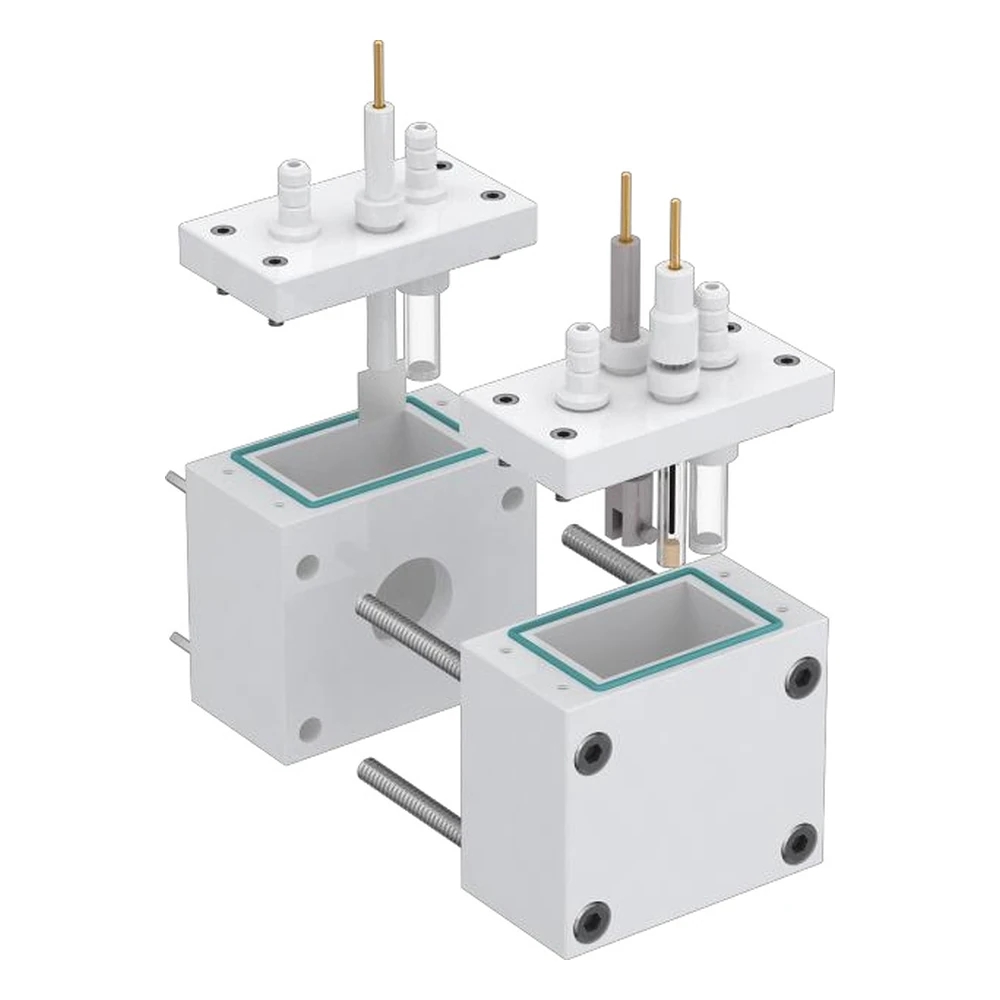
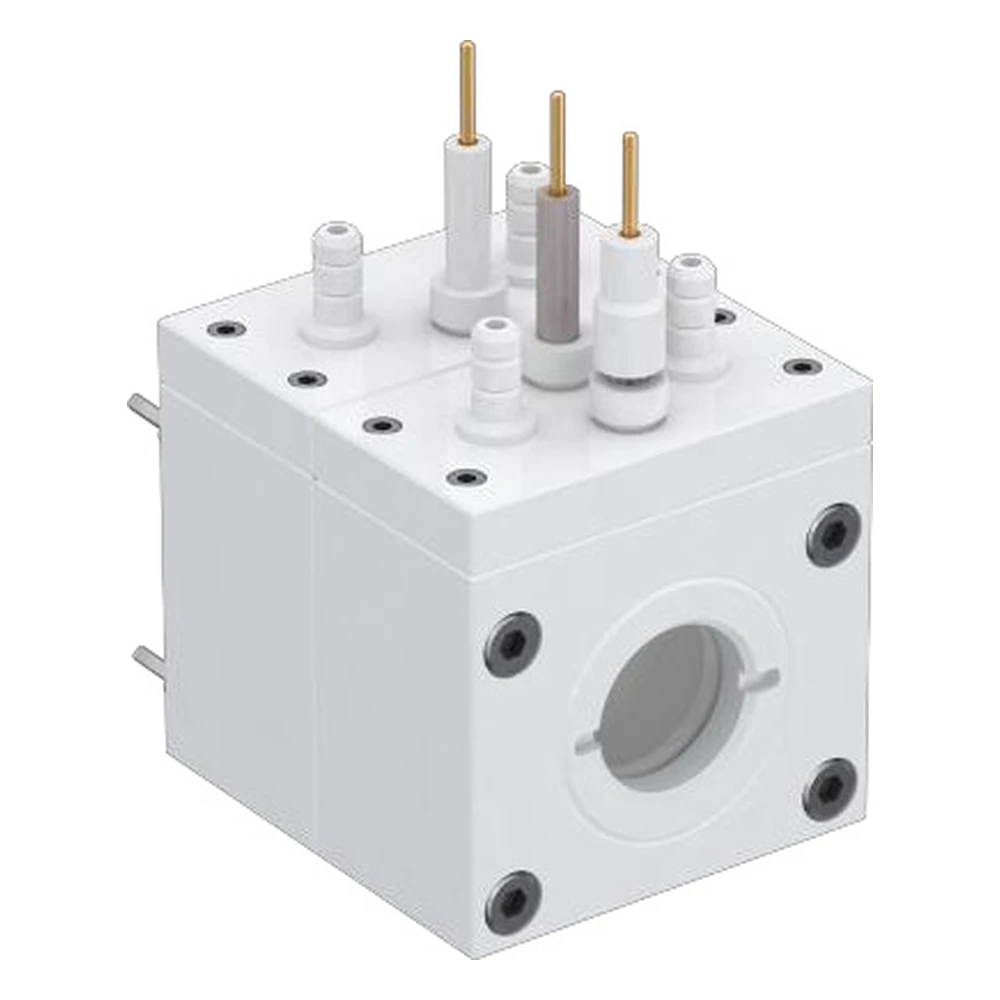
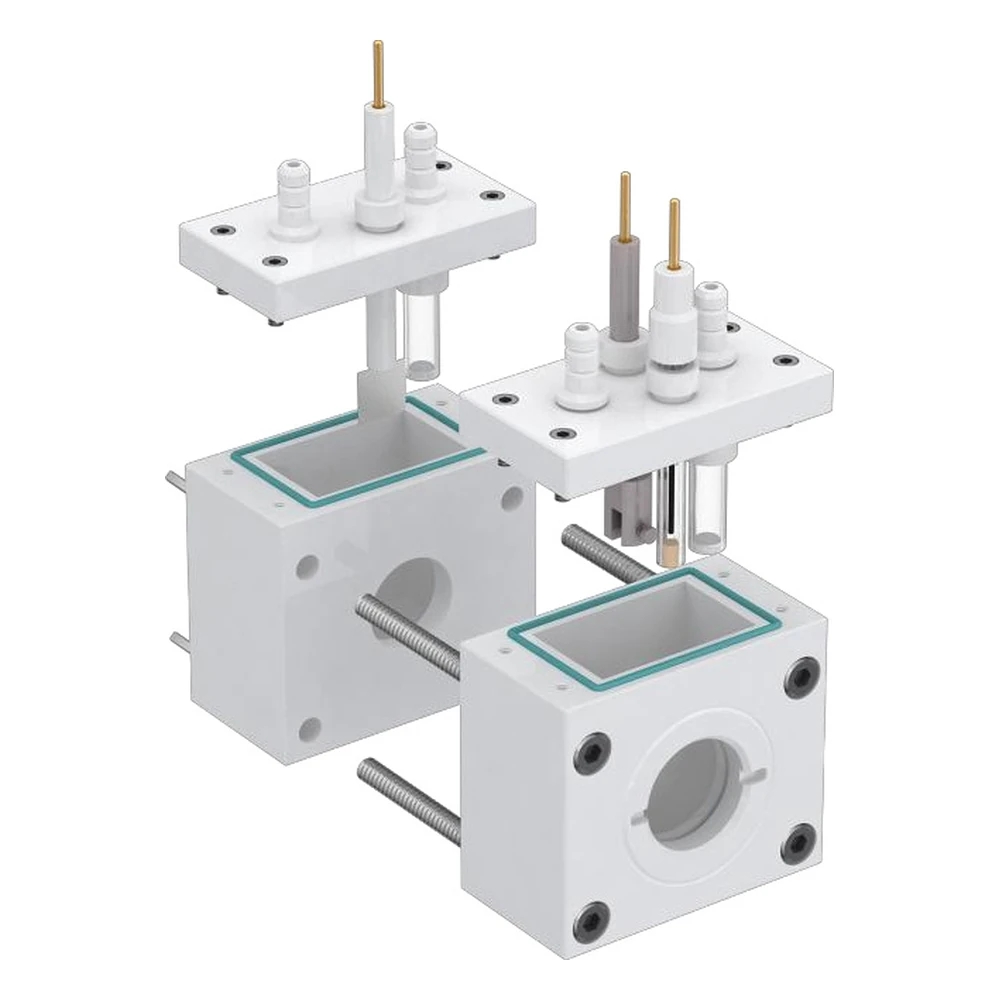
The compact all-PTFE H-type cell is a standard-sealed cell that separates the cathode (working electrode) and anode (counter electrode) compartments with an ion exchange membrane. The cathode and anode compartments are separated by an ion exchange membrane. This keeps products formed at one electrode from crossing to the other electrode and reacting again, and lets you control the electrolyte, pH and gas atmosphere of each compartment independently. The PTFE body offers almost universal chemical resistance and can be used up to 260 °C. It is a safe choice for electrolytes containing HF or strong alkali, which attack glass and quartz.
The two compartments are joined with through-bolts and the membrane is easy to change; the lid is sealed to the body with a pressure plate. The reference electrode sits in the same compartment as the working electrode, which reduces the ohmic (iR) drop in solution. Electrode feedthroughs are closed on a PTFE stopper with O-ring screws. A sparger delivers gas below the liquid surface. Different shapes are available for different experiments: straight for CO₂ reduction and L-type for nitrogen reduction (manufacturer data). A version with a quartz window can be selected for work with light.
| Cell type | Compact H-type membrane cell, standard-sealed |
| Body | PTFE |
| Compartment joint | Through-bolts, membrane supplied by user |
| Lid seal | Pressure plate |
| Window | Optional quartz window |
| Volume | 25 mL / 40 mL |
| Volume and Type options | 25 mL, 40 mL, 25 mL – With Quartz Window, 40 mL – With Quartz Window |
| Not included | Electrodes and membrane (sold separately) |
Electrodes and membranes shown in the photos are for illustration only and are not included in the price. Compatible reference, counter and working electrodes and membranes are available in the Electrodes category of our site.
For volumes, dimensions or port layouts other than those listed, you can request a custom-made quotation through the Quotation Form.


 Türkçe
 Engilish