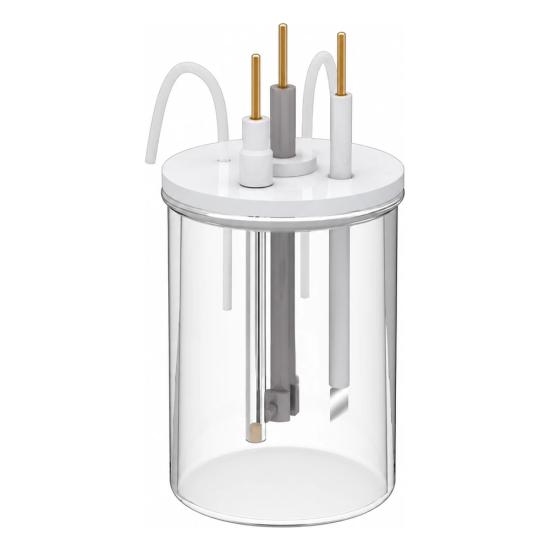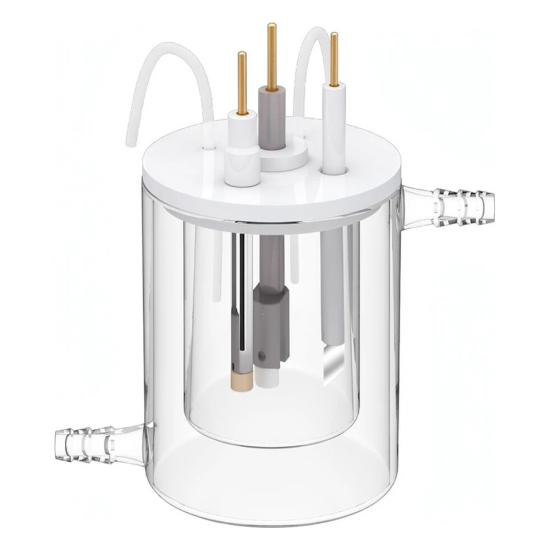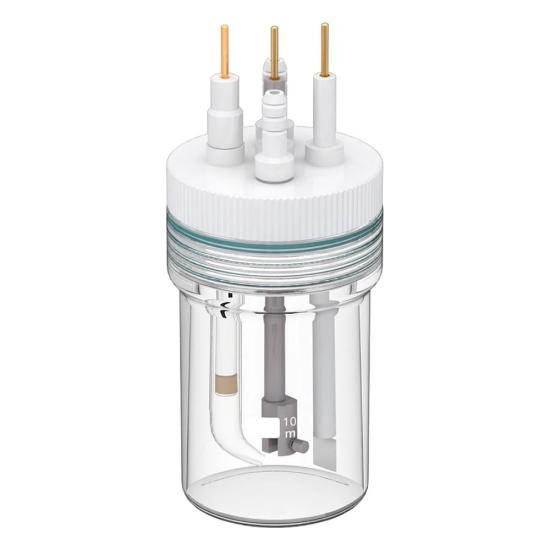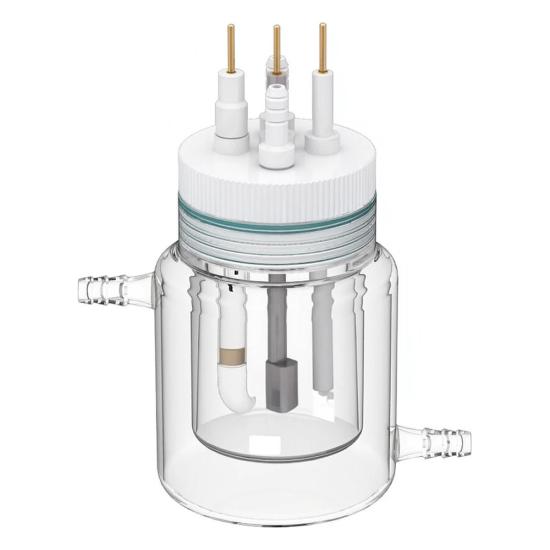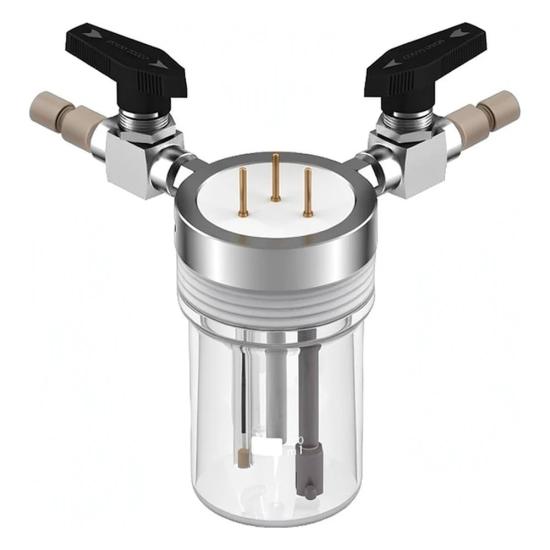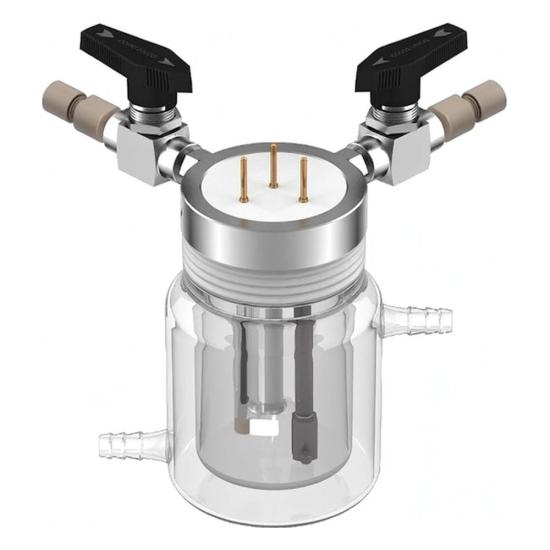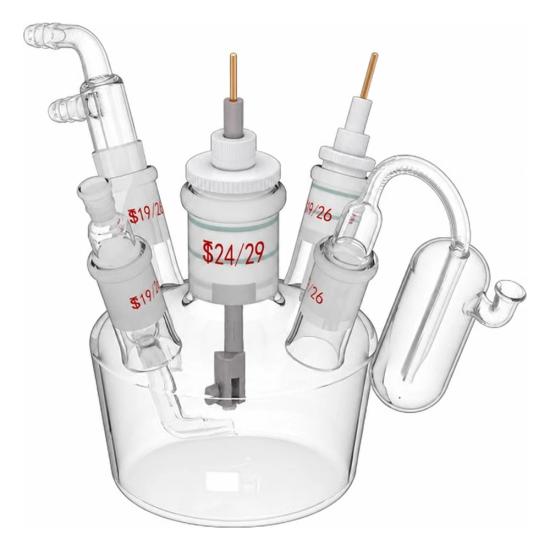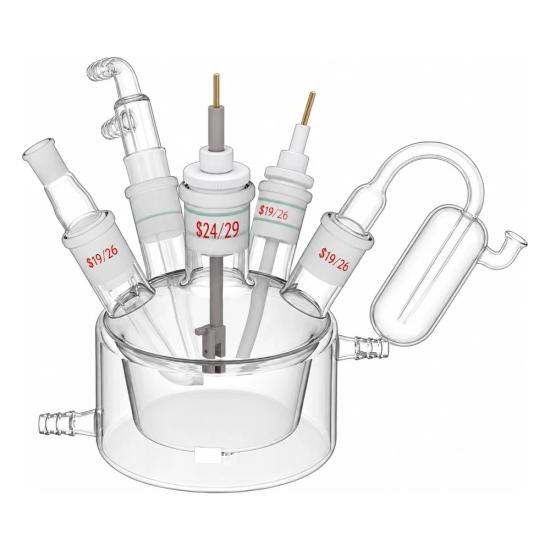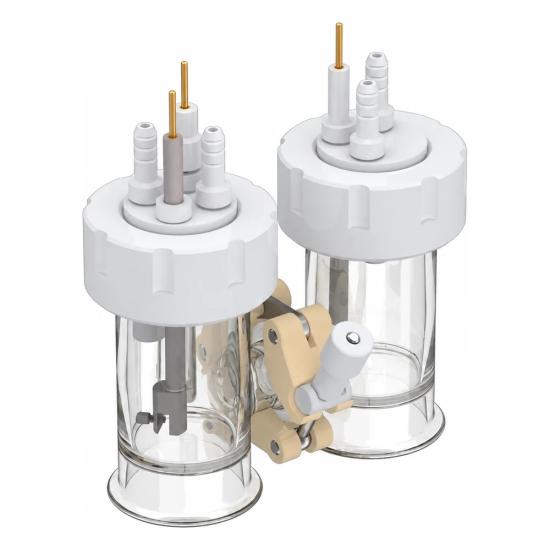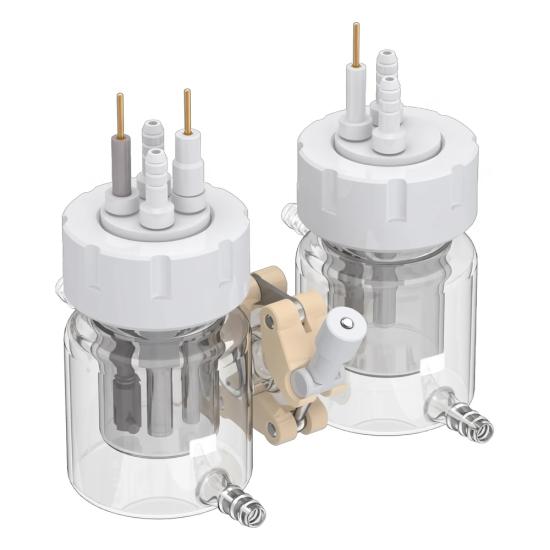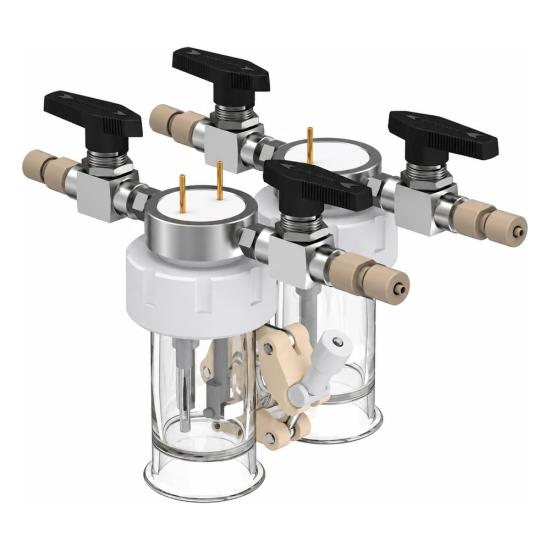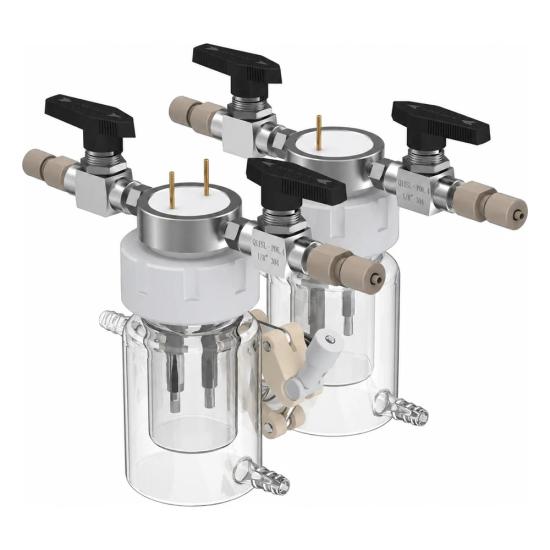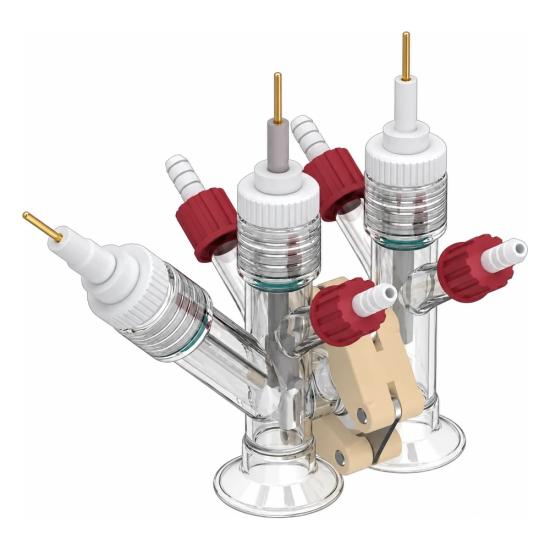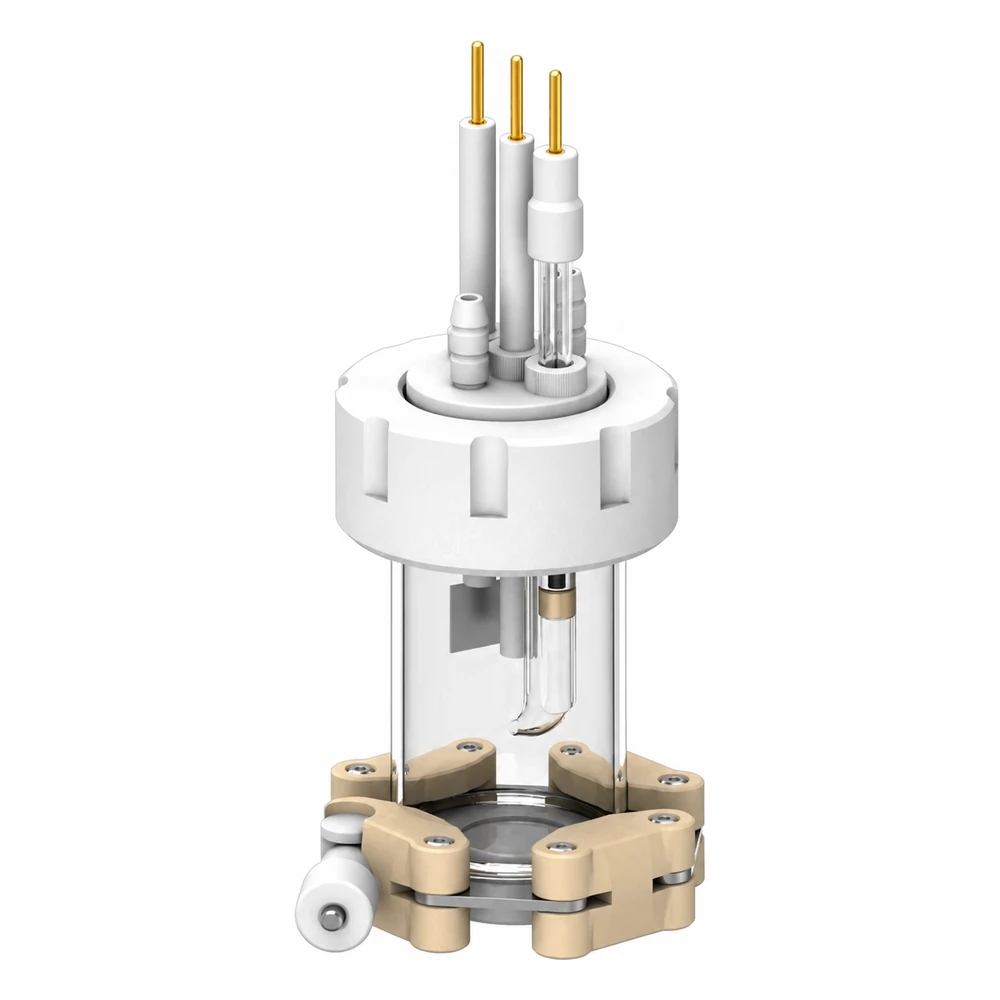
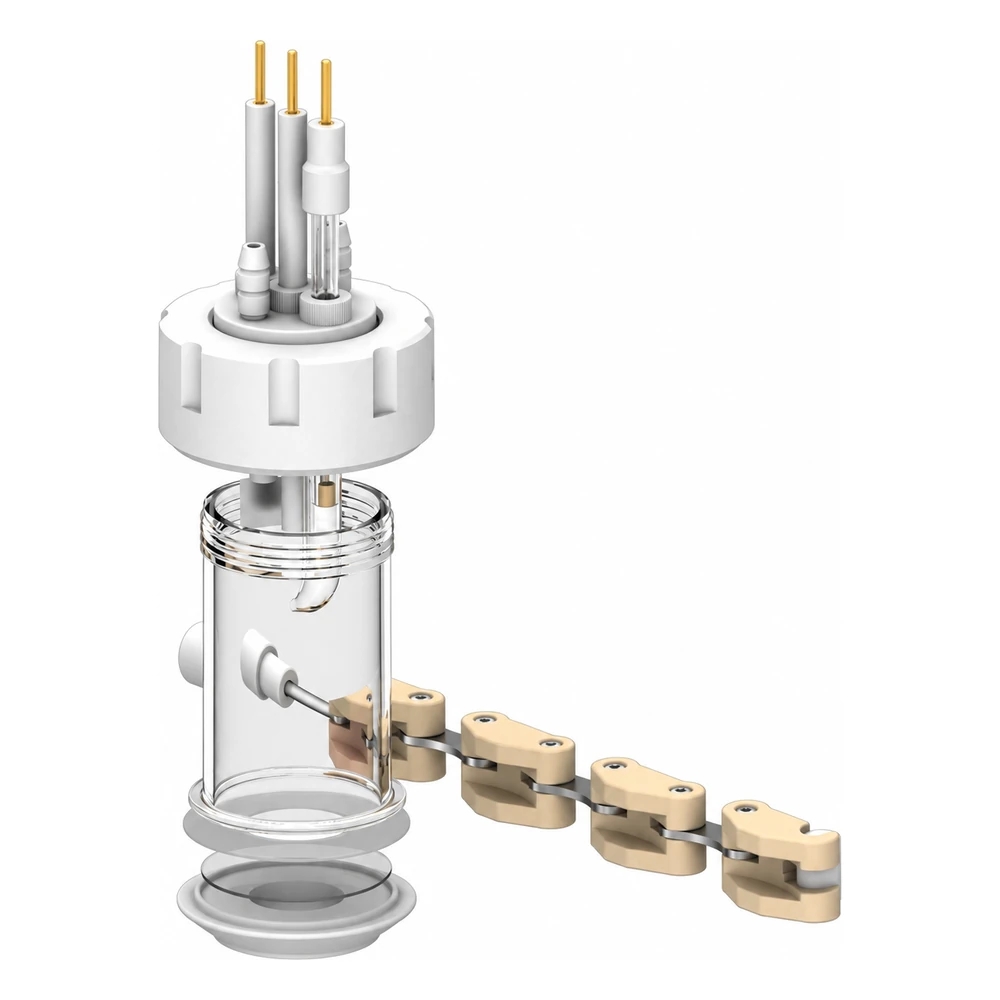
The 50 mL cylindrical quartz cell is made by fusion welding of quartz, with no glue, and transmittance above 95% (manufacturer data). The quartz neck is internally threaded and closed by tightening the PTFE lid; electrode feedthroughs are sealed on a PTFE stopper with O-ring screws. The cell has standard sealing and a gas inlet/outlet can be added on request.
3 mm disk electrodes (glassy carbon, gold, platinum, etc.) can be used as working electrodes. Electrodes are sold separately.
In the standard-sealed cell, the lid and electrode feedthroughs are closed with O-rings and sealing screws. An oxygen-free atmosphere is maintained by purging with nitrogen or argon. It is not intended for vacuum or pressure.
Quartz (fused silica) transmits light from about 190 nm up to the near infrared, while borosilicate glass largely blocks UV light below about 320 nm. Quartz is therefore used for UV-Vis spectroelectrochemistry and photoelectrochemical work with UV light. Quartz is not resistant to hydrofluoric acid (HF).
| Cell type | Cylindrical quartz cell, standard-sealed |
| Volume | 50 mL |
| Dimensions | OD 40 mm, ID 35 mm, height 80 mm |
| Body | Quartz, fusion-welded |
| Lid | PTFE, internally threaded neck |
| Transmittance | > 95% (manufacturer data) |
| Not included | Electrodes (sold separately) |
Electrodes and membranes shown in the photos are for illustration only and are not included in the price. Compatible reference, counter and working electrodes and membranes are available in the Electrodes category of our site.
For volumes, dimensions or port layouts other than those listed, you can request a custom-made quotation through the Quotation Form.


 Türkçe
 Engilish