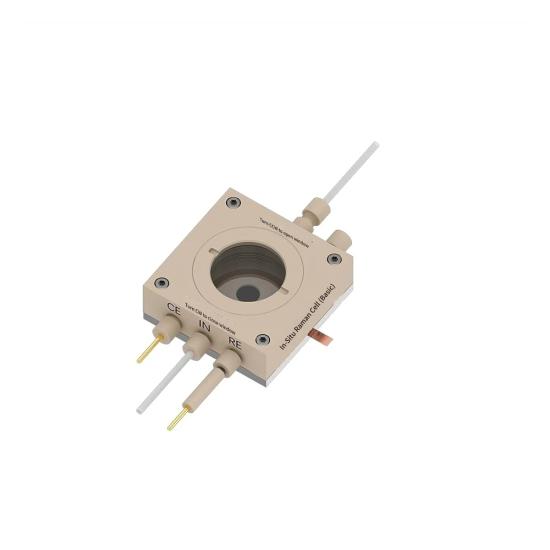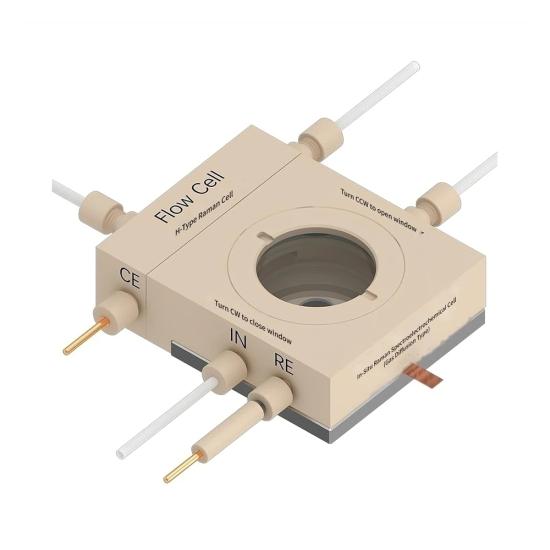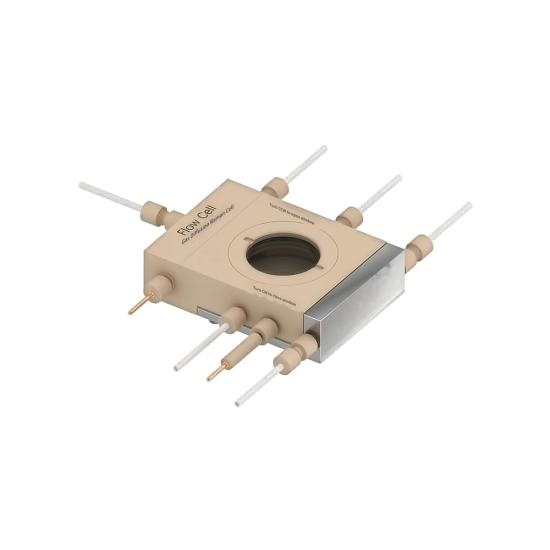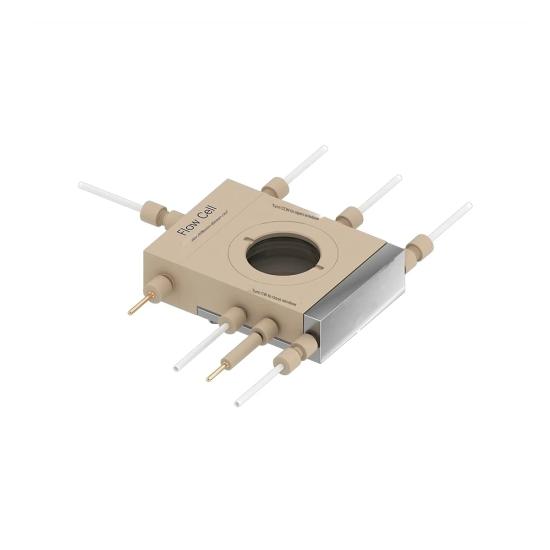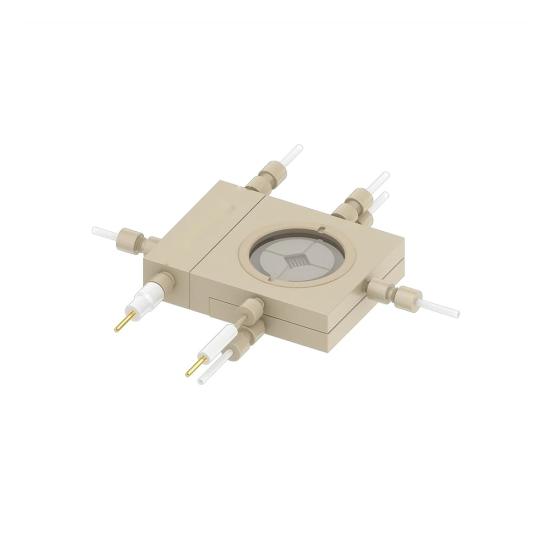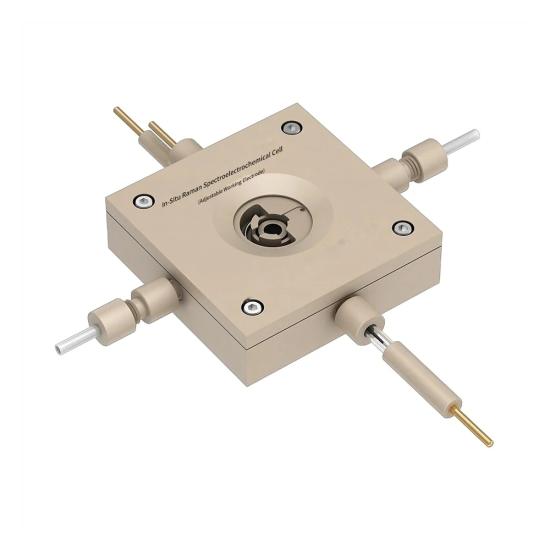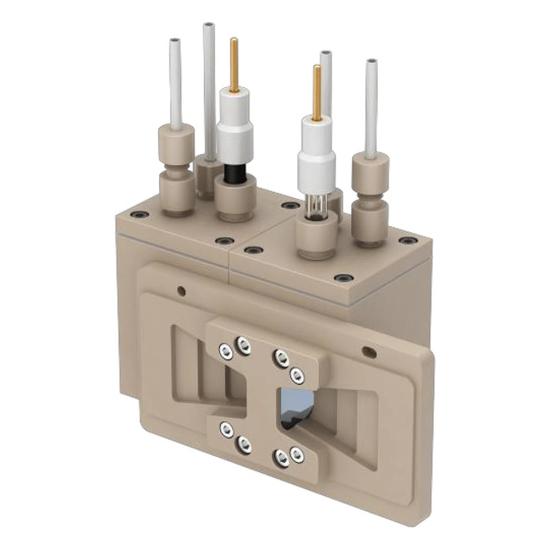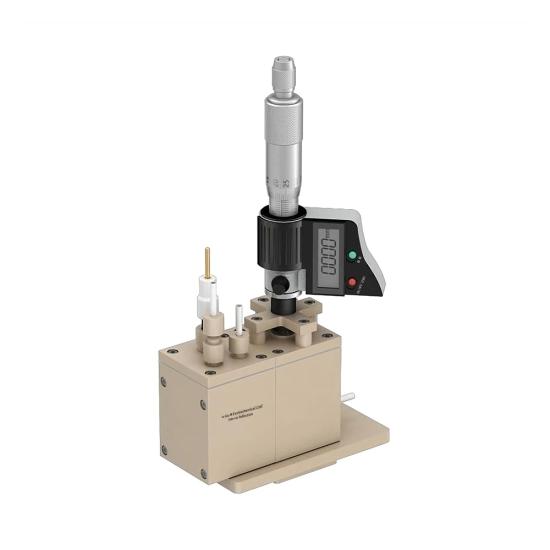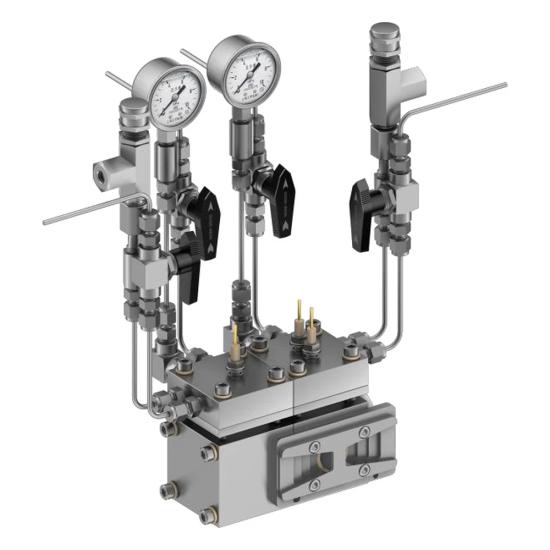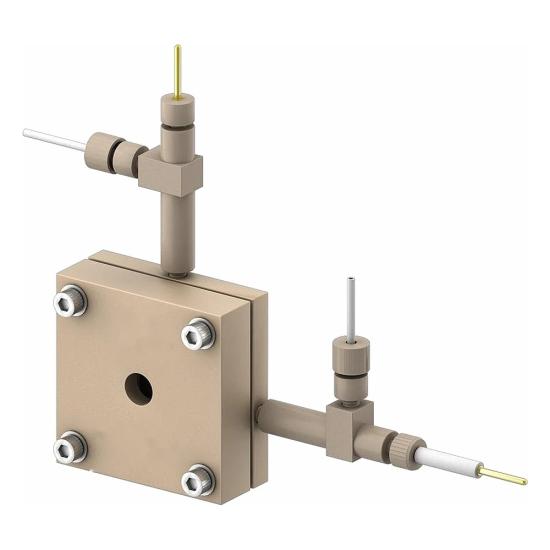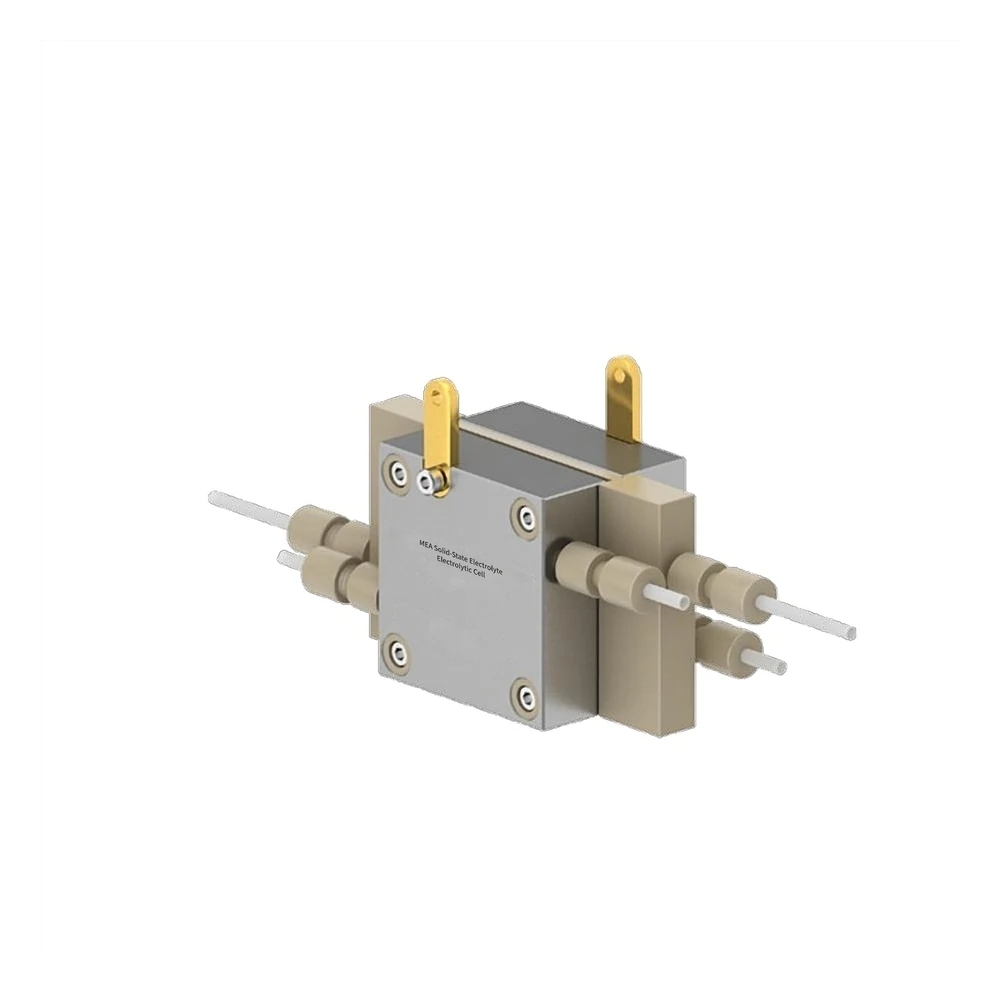
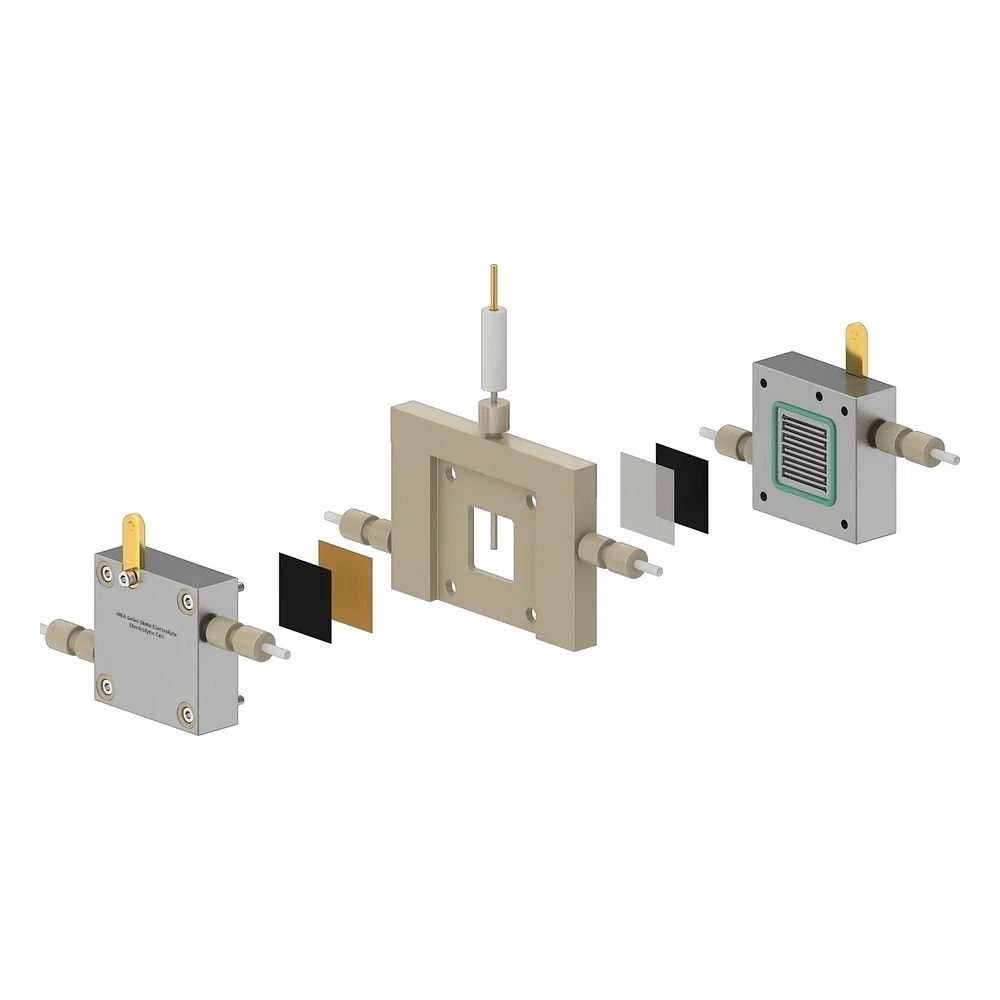
The solid-electrolyte cell has a sandwich design and uses a solid electrolyte instead of a liquid one to build a gas–solid interface, so a high-purity liquid product solution is obtained directly without ions entering the solution (Xia et al., Nature Energy 2019). The two outer plates are bipolar plates with serpentine gas channels; anion- and cation-exchange membranes and catalyst-loaded gas diffusion layers are placed between the plates and the central part (hot pressing is recommended). A 3 mm thick, 4 cm² cavity in the central part is filled with solid electrolyte (e.g. ion-exchange resin) and pure water flowing through carries the product out of the cell.
Standard two-electrode model with open central chamber, suitable for electrolyte evaluation and device testing.
| Active area | 20 × 20 mm (4 cm²) |
| Central chamber thickness | 3 mm |
| Gas flow field | Serpentine |
| Membranes | Anion- and cation-exchange membranes (user supplied) |
Dimensions, channel sizes and volume can be customised on request; please state special requirements in your quotation request.


 Türkçe
 Engilish