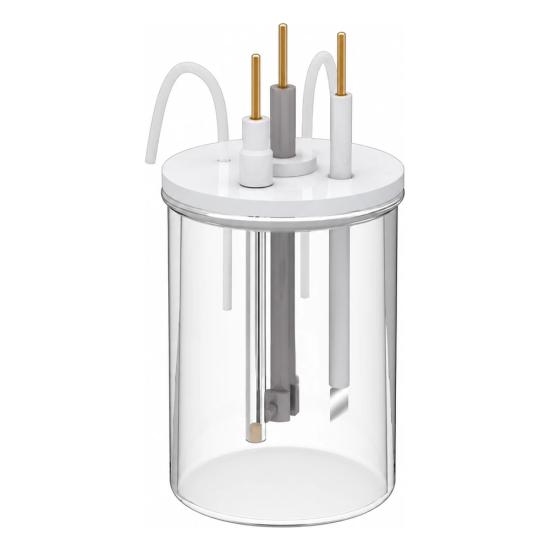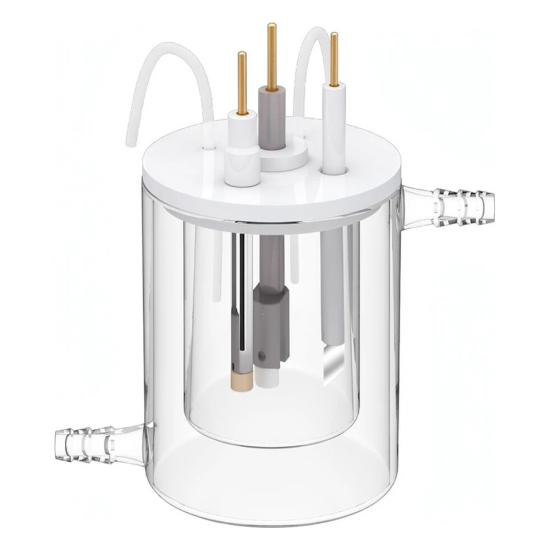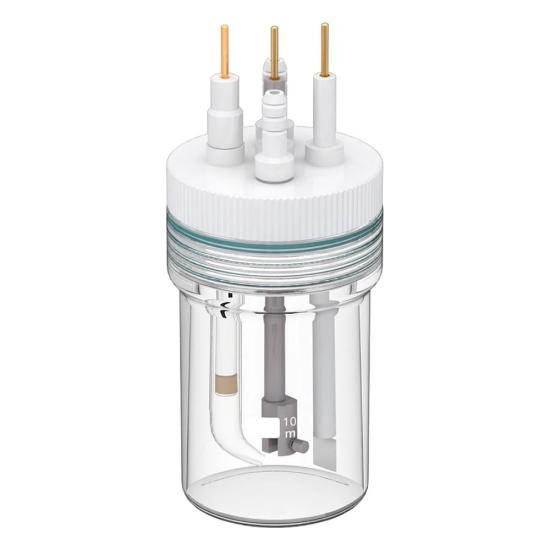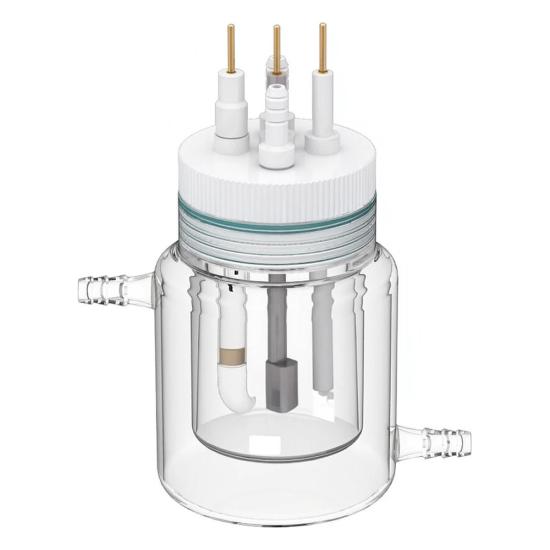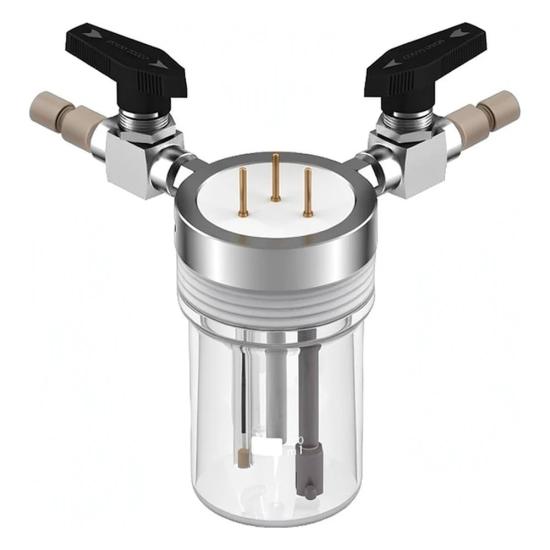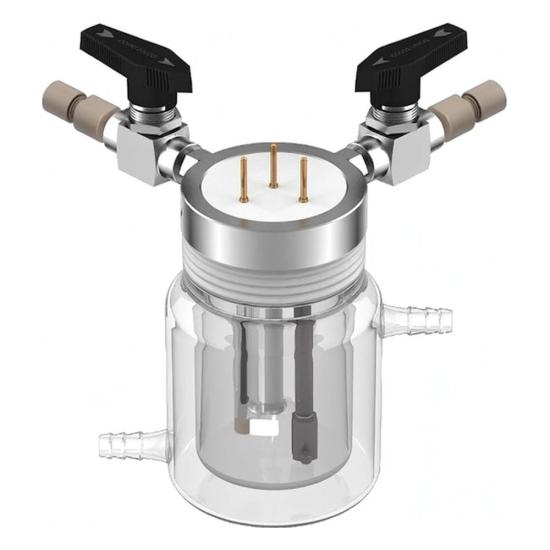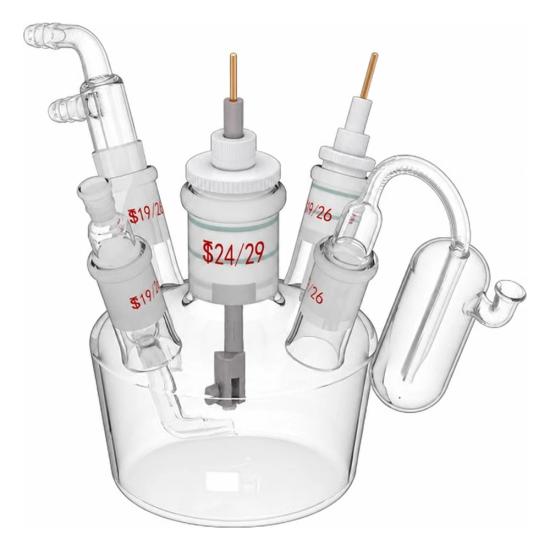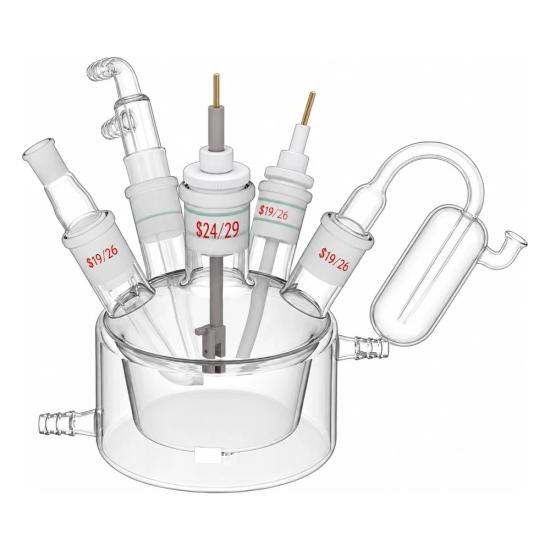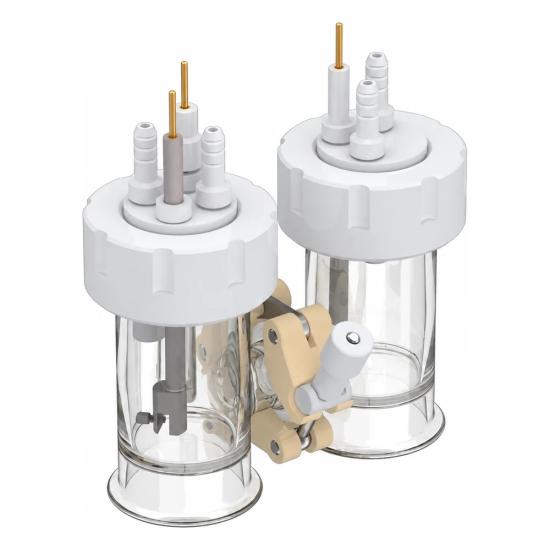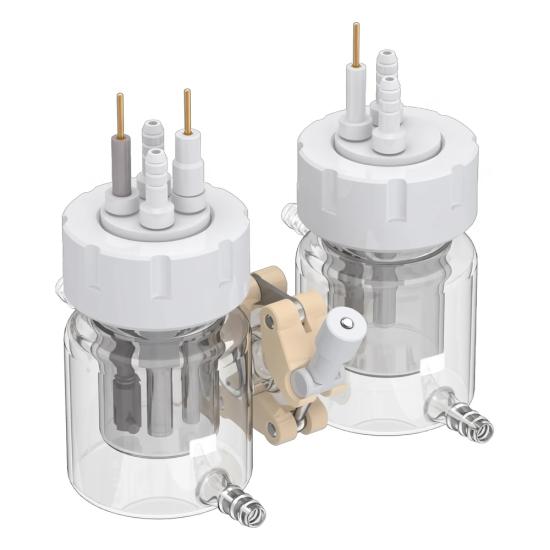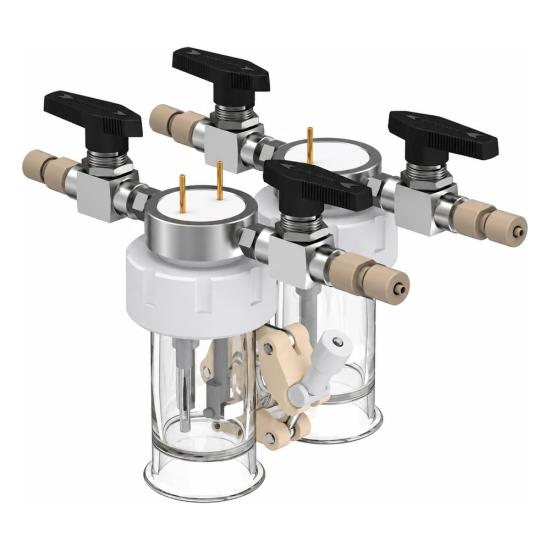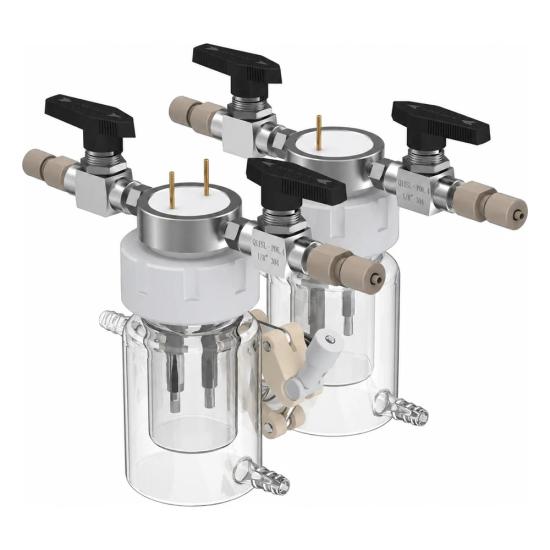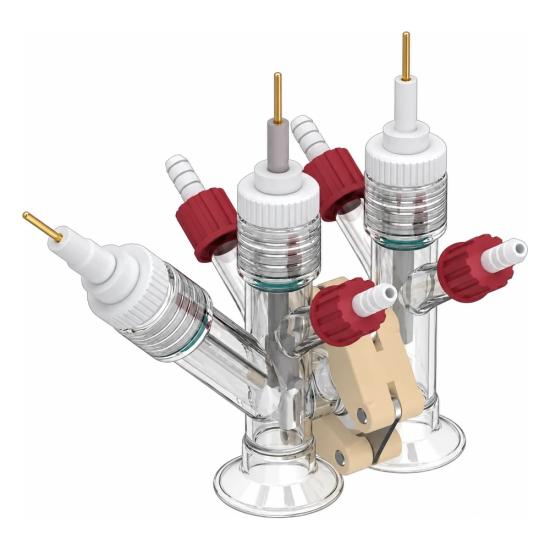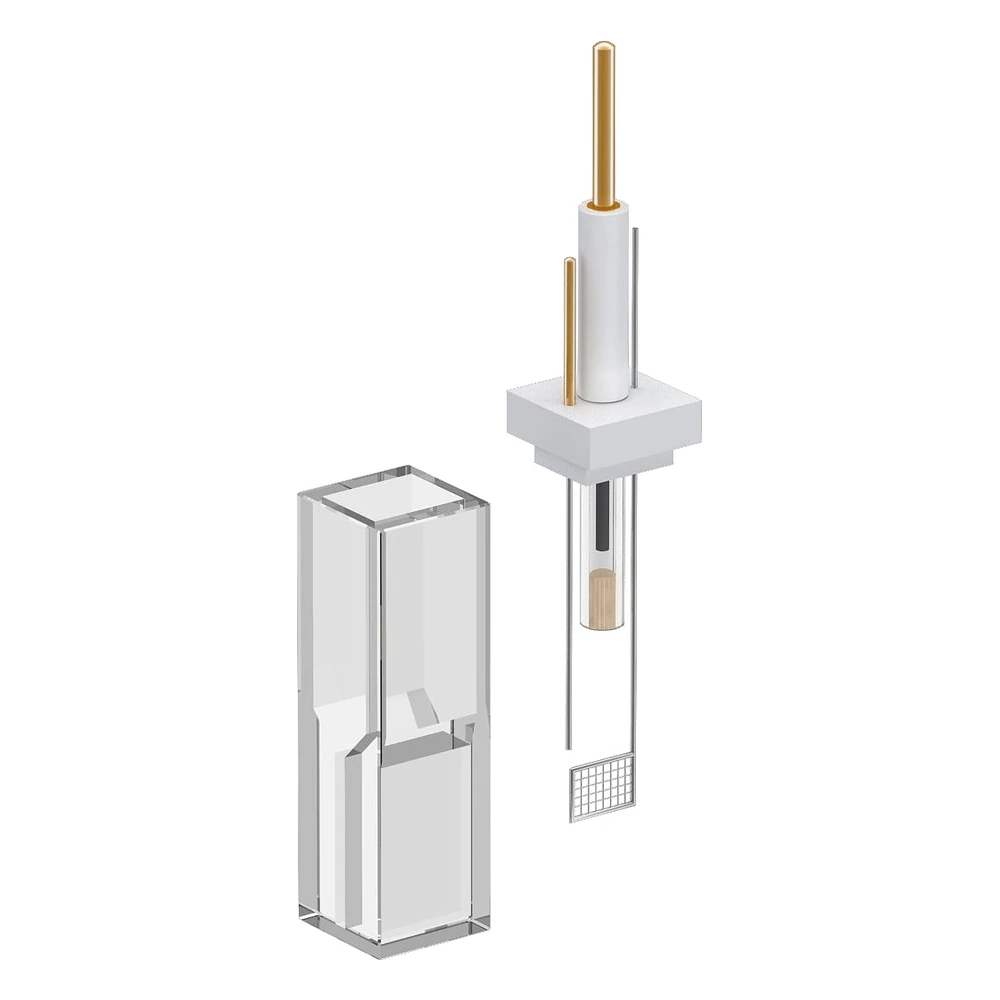
The thin-layer spectroelectrochemical cell lets you change the oxidation state of a species electrochemically while following its spectrum in a standard UV-Vis spectrophotometer. The platinum mesh working electrode sits in a narrow gap in the light path, so the species in the thin solution layer is converted completely in a short time and intermediates and final products can be followed in real time.
The body is machined from one piece of quartz, transparent on four sides with no glue; transmittance is above 95% (manufacturer data). The cell has a 12 × 12 mm square section and fits cuvette holders. The lid is PTFE. Compatible electrodes: Ø3.8 mm Ag/AgCl reference, Ø0.5 mm platinum wire counter and 6 × 7 mm platinum mesh working electrode; the working electrode can be replaced by a glassy carbon or gold disk (the AgCl electrode cannot then be used, manufacturer data). This cell is the open type.
Quartz (fused silica) transmits light from about 190 nm up to the near infrared, while borosilicate glass largely blocks UV light below about 320 nm. Quartz is therefore used for UV-Vis spectroelectrochemistry and photoelectrochemical work with UV light. Quartz is not resistant to hydrofluoric acid (HF).
| Cell type | Thin-layer spectroelectrochemical cell, open |
| Body | Quartz, one piece, 12 × 12 mm |
| Thin gap | 8 × 6.5 × 1 mm |
| Transmittance | > 95% (manufacturer data) |
| Lid | PTFE |
| Compatible electrodes | Ag/AgCl Ø3.8 mm; Pt wire Ø0.5 mm; Pt mesh 6 × 7 mm (sold separately) |
| Not included | Electrodes (sold separately) |
Electrodes and membranes shown in the photos are for illustration only and are not included in the price. Compatible reference, counter and working electrodes and membranes are available in the Electrodes category of our site.
For volumes, dimensions or port layouts other than those listed, you can request a custom-made quotation through the Quotation Form.


 Türkçe
 Engilish