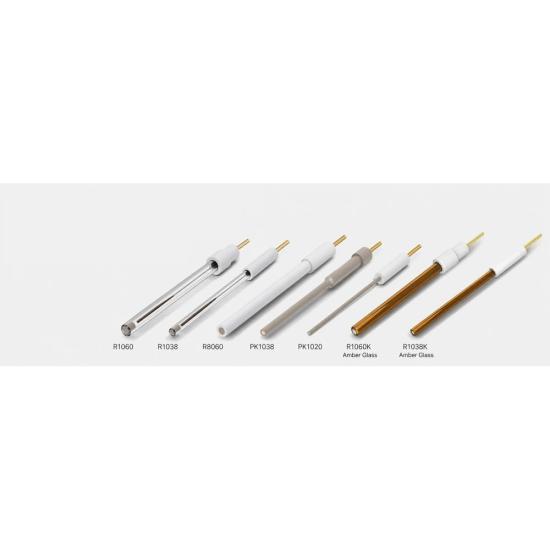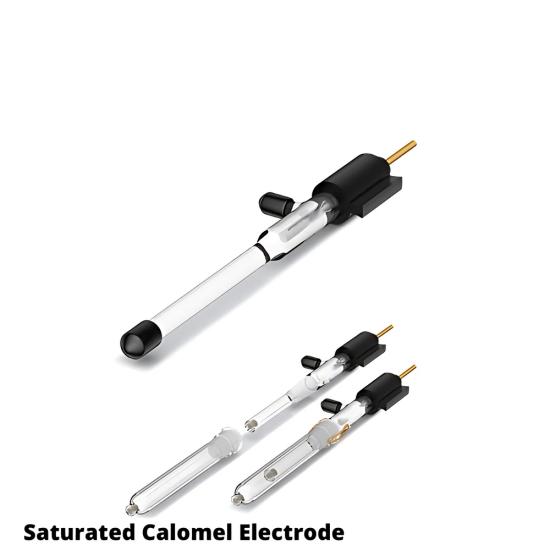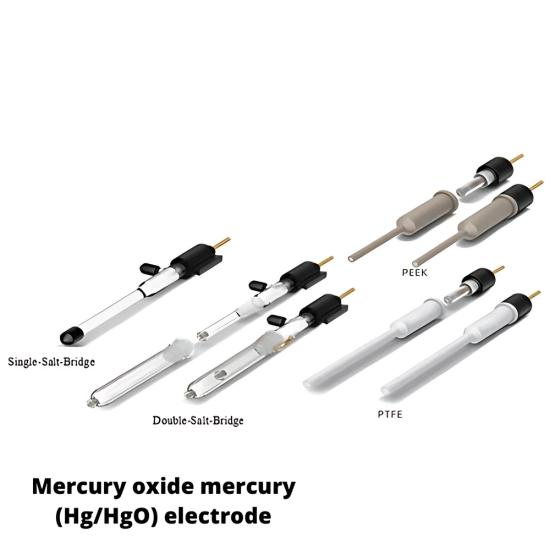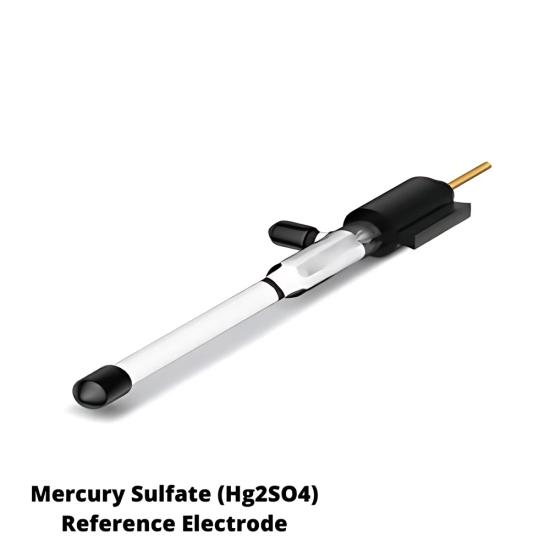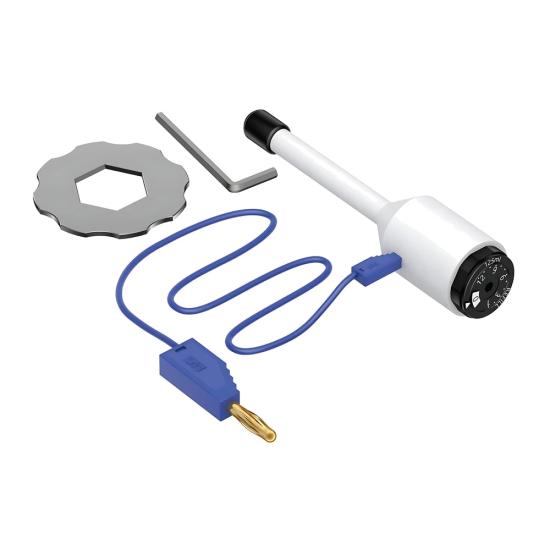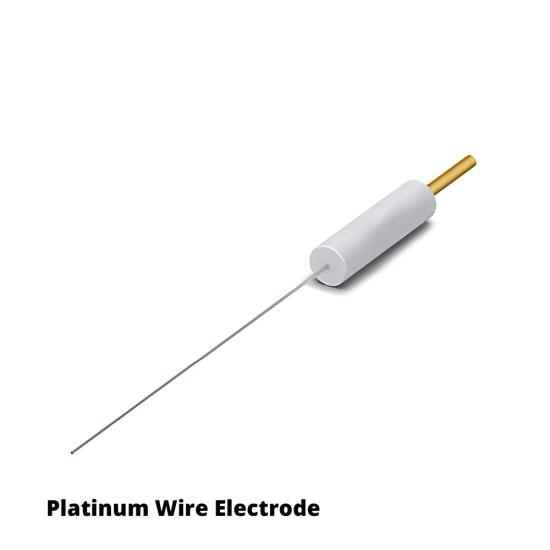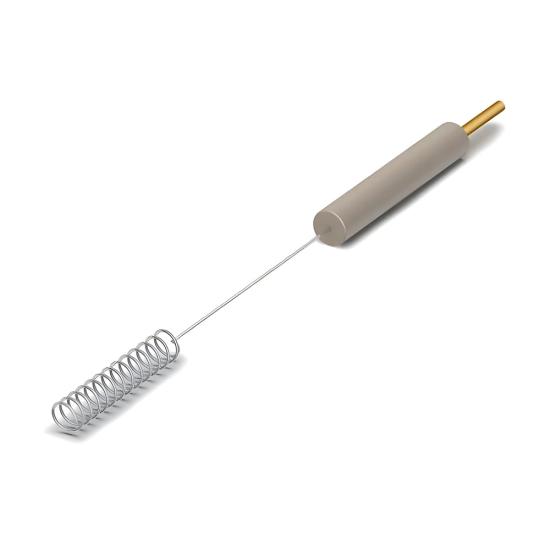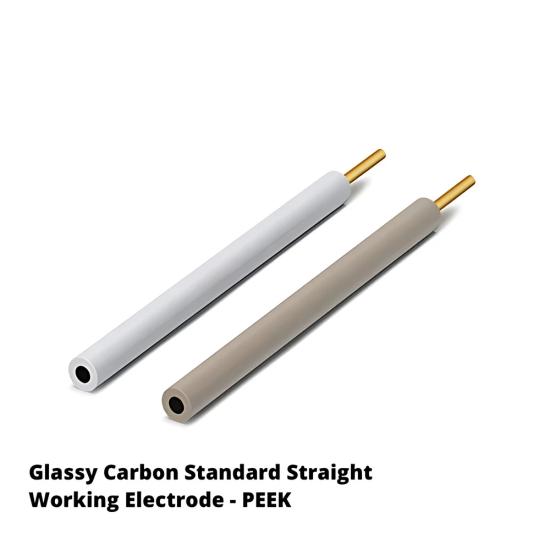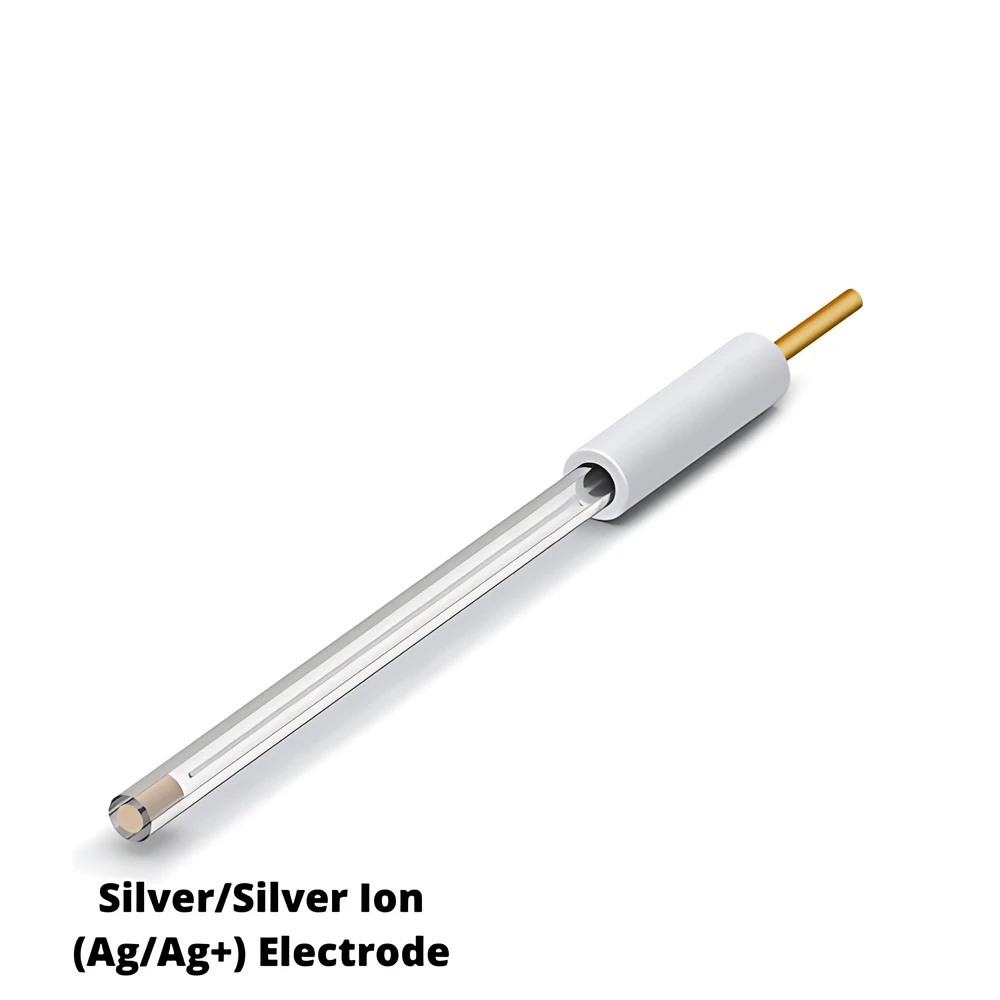
The Ag/Ag⁺ electrode is a reference electrode in which a silver wire is immersed in a non-aqueous electrolyte solution containing a silver salt (typically AgNO₃). When the solution is prepared in the same solvent as the measured solution, water and chloride are kept out of the cell, and the precipitation problems that aqueous electrodes cause at the frit are reduced. It is widely used in aprotic solvents (acetonitrile, DMF, DMSO, propylene carbonate).
Its potential depends on the solvent, the Ag⁺ concentration and the electrolyte, and has no single value vs. SHE. To make results comparable, add the ferrocene/ferrocenium (Fc/Fc⁺) couple as an internal reference in every experiment and report potentials against it (IUPAC recommendation).
| Electrode type | Ag/Ag⁺ reference electrode (for non-aqueous systems) |
| Typical internal solution | 0.001–0.01 M AgNO₃ (or AgClO₄) plus a supporting electrolyte such as 0.1 M TBAP, in acetonitrile, DMF, DMSO or propylene carbonate |
| Suitable media | Organic (non-aqueous) solution systems; using the same solvent and supporting electrolyte as the measured solution reduces the junction potential |
| Solvent choice | Acetonitrile is recommended for the positive potential region and DMSO for the negative region; purify the solvent thoroughly before use |
| Potential | Depends on solvent, Ag⁺ concentration and electrolyte; there is no single value vs. SHE. Calibrate with the Fc/Fc⁺ internal reference in every experiment |
| Junction tip | If a porous glass tip dries, salt crystallizes, cracks the tip and causes leakage; never let it dry out completely |
| Air bubbles | An air bubble trapped in the narrow glass section interrupts the current; tap the electrode gently to remove it |
| Storage and care | Replace the silver-ion solution with plain supporting electrolyte (e.g. 0.1 M TBAP/acetonitrile) and store in a closed container; renew the Ag⁺ solution frequently according to use |
| Silver wire | Polish with fine abrasive paper and rinse with pure water and acetone before use |
| Body material | Glass |
| Body diameter | 3.8 mm (4038) / 6.0 mm (4060) |
| Model | Description |
| 4038 | 3.8 mm diameter glass body |
| 4060 | 6.0 mm diameter glass body |
For sizes and specifications not listed above, you can request a custom quotation through the Quote Form.


 Türkçe
 Engilish