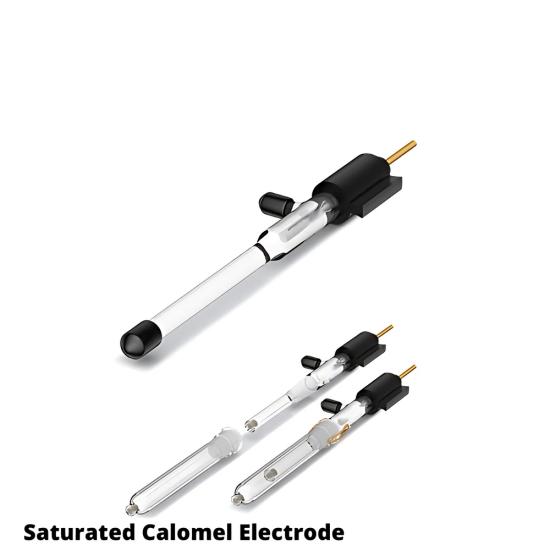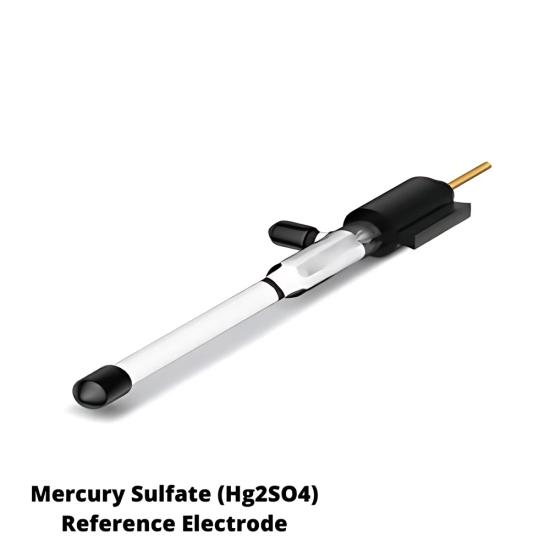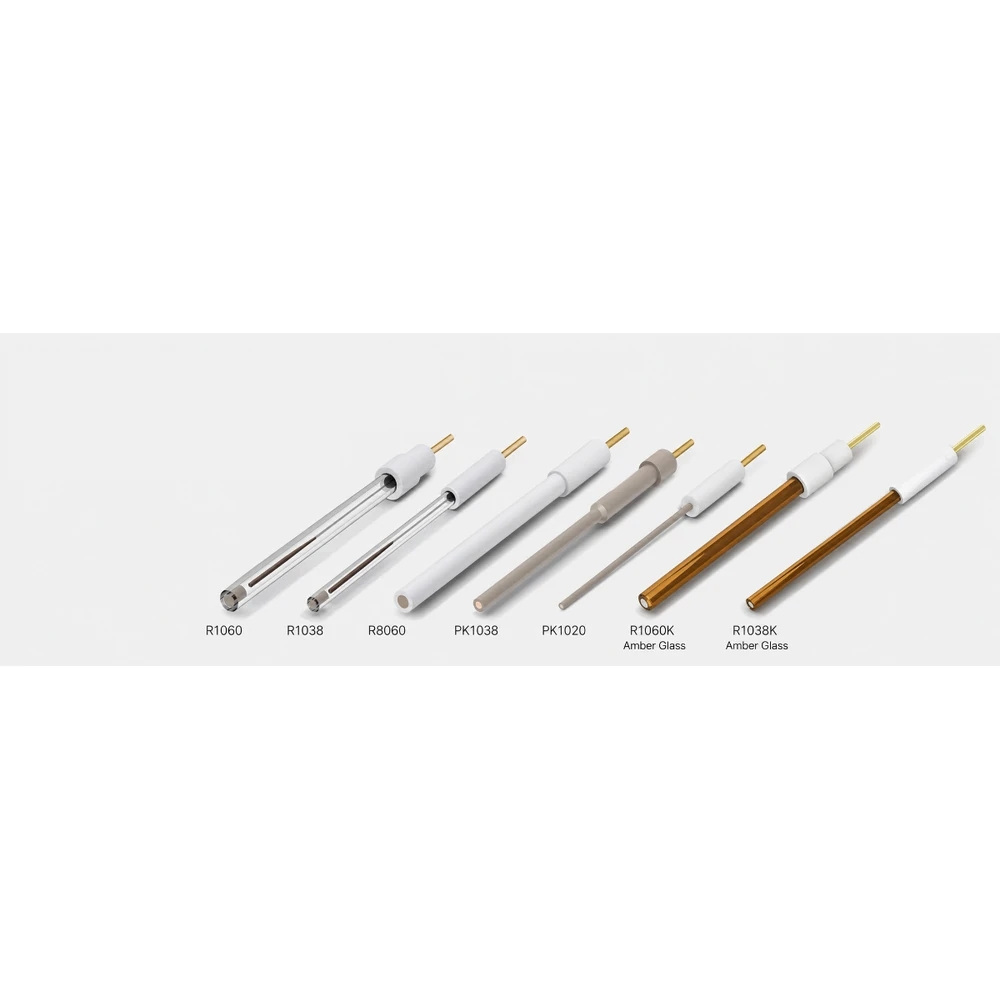
The Ag/AgCl reference electrode is a simple construction: a silver wire coated with AgCl, immersed in a chloride-containing filling solution. As long as the chloride concentration stays constant, its potential stays constant, so in a three-electrode cell you measure the working electrode potential against this fixed point. In this product the filling is saturated KCl. It contains no mercury and is the most common choice in neutral aqueous electrolytes, which is why it is seen as a practical alternative to the SCE.
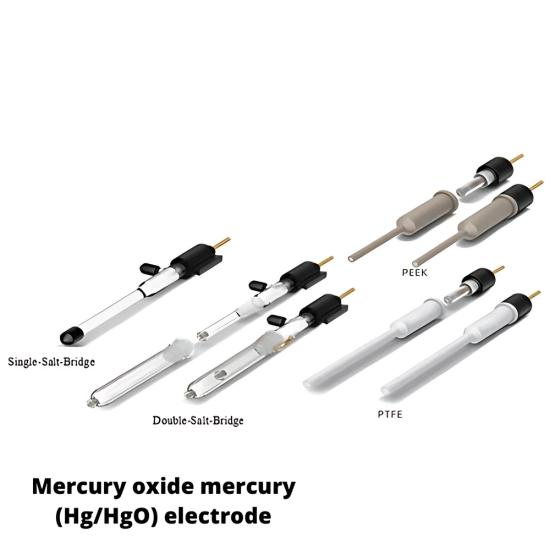
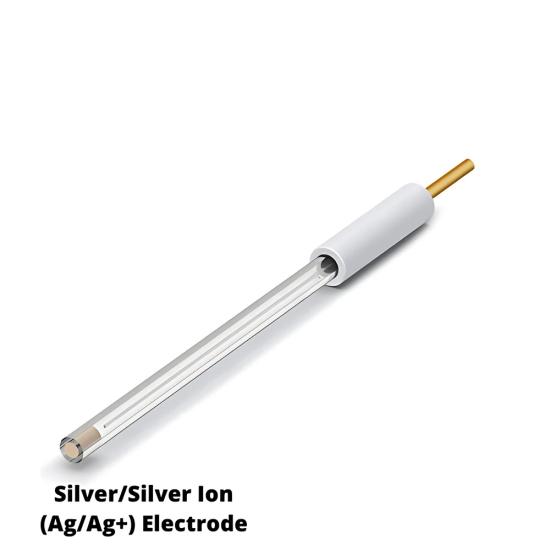
Where chloride would cause problems (chloride-sensitive corrosion, halide-affected electrocatalysis), choose the double salt bridge or double junction models. In acidic or alkaline solutions a salt bridge protects the electrode; for concentrated KOH/NaOH, Hg/HgO is the more appropriate reference. In organic electrolytes, use an Ag/Ag⁺ type electrode instead of an aqueous Ag/AgCl.
| Electrode type | Ag/AgCl reference electrode (electrode of the second kind in chloride electrolyte) |
| Internal filling solution | Saturated KCl (standard glass models) |
| Potential (vs. SHE, 25 °C) | +0.197 V (saturated KCl); +0.207 to 0.210 V (3 M KCl); +0.236 V (1 M KCl) |
| Temperature effect | About −0.7 to −1 mV/°C; keep the temperature constant or report it for precise work |
| Suitable media | Neutral aqueous electrolytes; typical use up to about 80–100 °C (depends on model and body material) |
| Acidic / alkaline media | Use with a salt bridge; in alkaline media a porous glass junction can degrade over time. For concentrated KOH/NaOH prefer Hg/HgO |
| Chloride and silver interference | Chloride (and a little silver) slowly leaks from the electrode; in chloride-sensitive systems use a double junction model or a chloride-free bridge |
| Junction clogging | KClO₄ can precipitate in perchlorate-containing electrolytes; ions such as Ag⁺, Hg²⁺ and Pb²⁺ can precipitate with chloride and block the junction. Br⁻, I⁻, CN⁻ and S²⁻ also form insoluble salts with Ag⁺ |
| Organic solvents | An aqueous Ag/AgCl is not directly suitable; choose an Ag/Ag⁺ electrode for non-aqueous systems |
| Storage and care | Never let the tip dry out; store in saturated KCl solution, not in deionized water. Rinse with pure water after use |
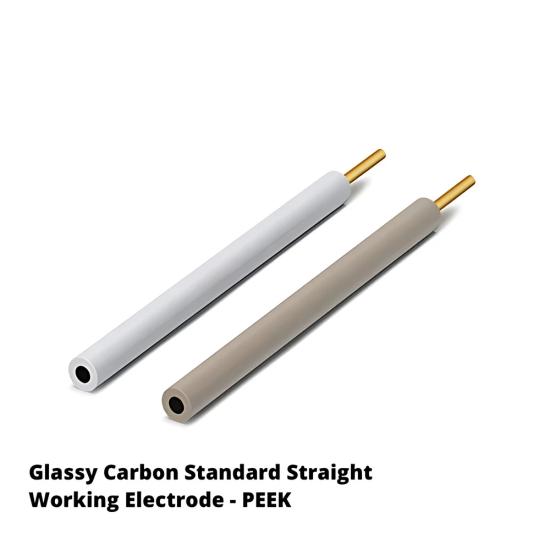
| Body | Glass (clear or brown) or PEEK (PK series); R8060 is a double salt bridge design |
| Use | Fixed reference point for voltammetry and EIS in three-electrode cells |
| Model | Description |
| R1038 | Standard model |
| R1060 Standard | Standard length |
| R1060 Long | Extended length |
| R8060 Double Salt Bridge | Double salt bridge design |
| PK-1020 PEEK Body | PEEK body model |
| PK-1038 PEEK Body | PEEK body model |
| R1038K Light-Shielded | Brown glass body, light-shielded |
| R1060K Light-Shielded | Brown glass body, light-shielded |
| Double Junction | Double junction design |
For sizes and specifications not listed above, you can request a custom quotation through the Quote Form.


 Türkçe
 Engilish