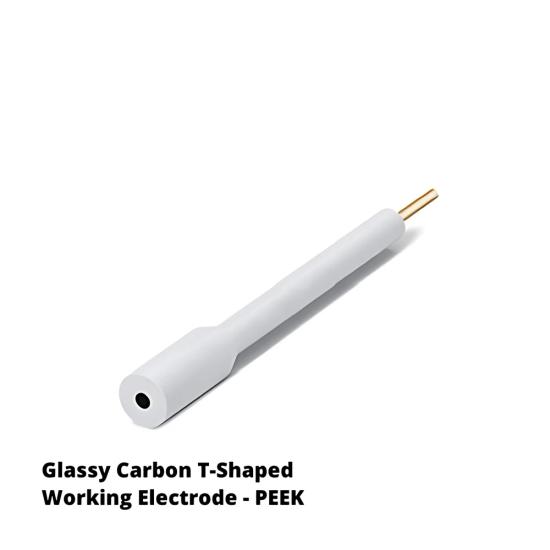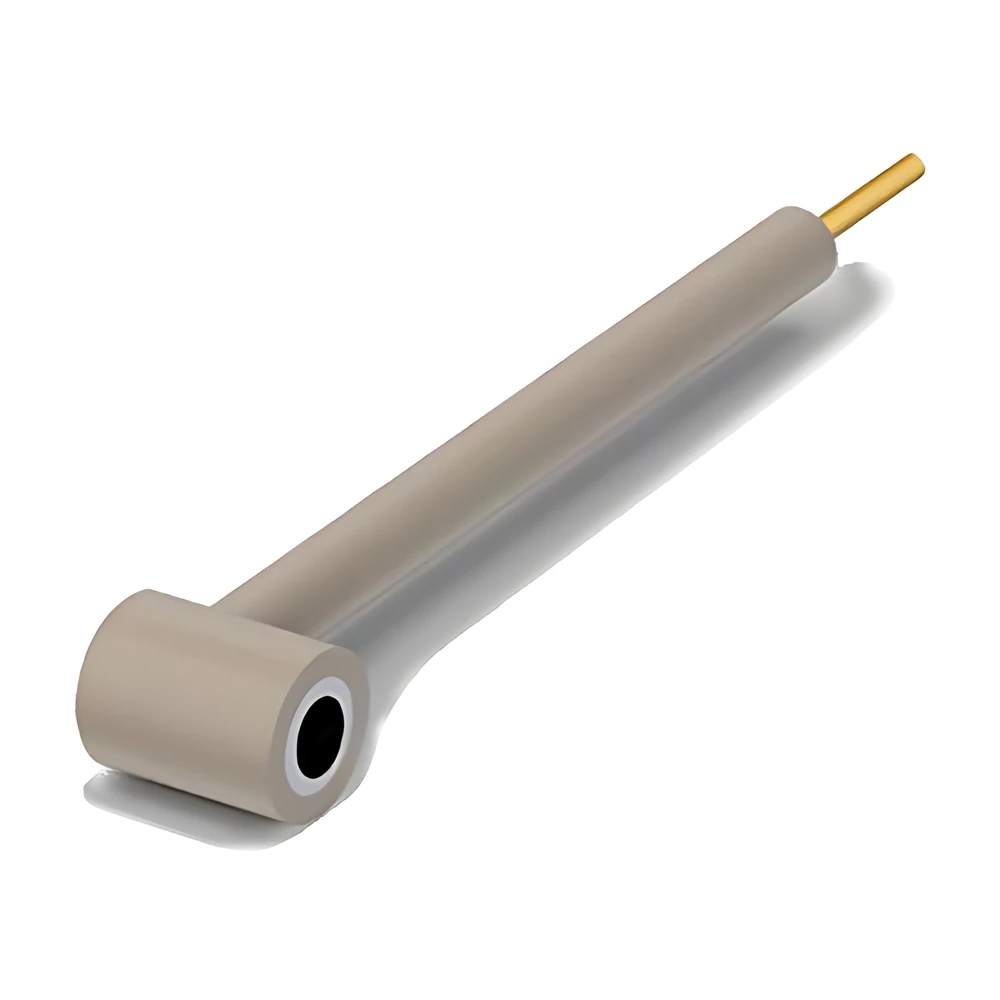
This product group covers disk working electrodes made of materials other than glassy carbon, platinum, gold and silver. When you want to study the electrochemical behavior of a material directly, a flat disk of that material is a clean starting point: iron, steels and copper are used in corrosion studies, palladium in hydrogen adsorption and desorption research, nickel in sensors with modified surfaces, and carbon paste in modified electrodes prepared by mixing other substances into the paste.
Choose the material for your experiment; diameter options range from 2 to 6 mm depending on the material. A carbon paste electrode is not polished; its surface is refreshed by renewing the paste. The silver-based mercury film electrode is intended for stripping voltammetry of heavy metals. Mercury and cadmium are toxic; handle these electrodes with gloves and dispose of their waste as hazardous waste. Materials not on the list can be quoted.
| Electrode type | Disk working electrode with insulating body |
| Carbon materials | Pyrolytic graphite (2–6 mm), graphite (2–6 mm), isotropic graphite (2–4 mm), carbon paste fixed / adjustable (2–4 mm) |
| Iron and steels | Iron (2–4 mm), carbon steel (2–5 mm), stainless steel (2–5 mm) |
| Other metals | Nickel, tungsten, zinc, copper, titanium (2–4 mm); palladium (3 mm); cadmium (2 mm) |
| Mercury film electrode | Silver-based mercury film, 2 × 10 mm |
| Surface renewal | Metal disks (e.g. nickel): alumina on microcloth; pyrolytic graphite: fine emery paper with pure water (no polishing slurry); carbon paste: not polished, remove about 1 mm of paste and renew the surface |
| Safety | Mercury and cadmium are toxic: wear gloves and dispose of waste as hazardous waste |
| Custom material | On request |
| Electrode Material | Description |
| Pyrolytic Graphite 2 – 6 mm | Pyrolytic Graphite 2 – 6 mm disk working electrode |
| Graphite 2 – 6 mm | Graphite 2 – 6 mm disk working electrode |
| Isotropic Carbon Graphite 2 – 4 mm | Isotropic Carbon Graphite 2 – 4 mm disk working electrode |
| Nickel 2 – 4 mm | Nickel 2 – 4 mm disk working electrode |
| Carbon Paste (Fixed) 2 – 4 mm | Carbon Paste (Fixed) 2 – 4 mm disk working electrode |
| Carbon Paste (Adjustable) 2 – 4 mm | Carbon Paste (Adjustable) 2 – 4 mm disk working electrode |
| Tungsten 2 – 4 mm | Tungsten 2 – 4 mm disk working electrode |
| Iron 2 – 4 mm | Iron 2 – 4 mm disk working electrode |
| Carbon Steel 2 – 5 mm | Carbon Steel 2 – 5 mm disk working electrode |
| Stainless Steel 2 – 5 mm | Stainless Steel 2 – 5 mm disk working electrode |
| Zinc 2 – 4 mm | Zinc 2 – 4 mm disk working electrode |
| Copper 2 – 4 mm | Copper 2 – 4 mm disk working electrode |
| Titanium 2 – 4 mm | Titanium 2 – 4 mm disk working electrode |
| Palladium 3 mm | Palladium 3 mm disk working electrode |
| Cadmium 2 mm | Cadmium 2 mm disk working electrode |
| Silver-Based Mercury Film 2 × 10 mm | Silver-Based Mercury Film 2 × 10 mm disk working electrode |
For sizes and specifications not listed above, you can request a custom quotation through the Quote Form.


 Türkçe
 Engilish