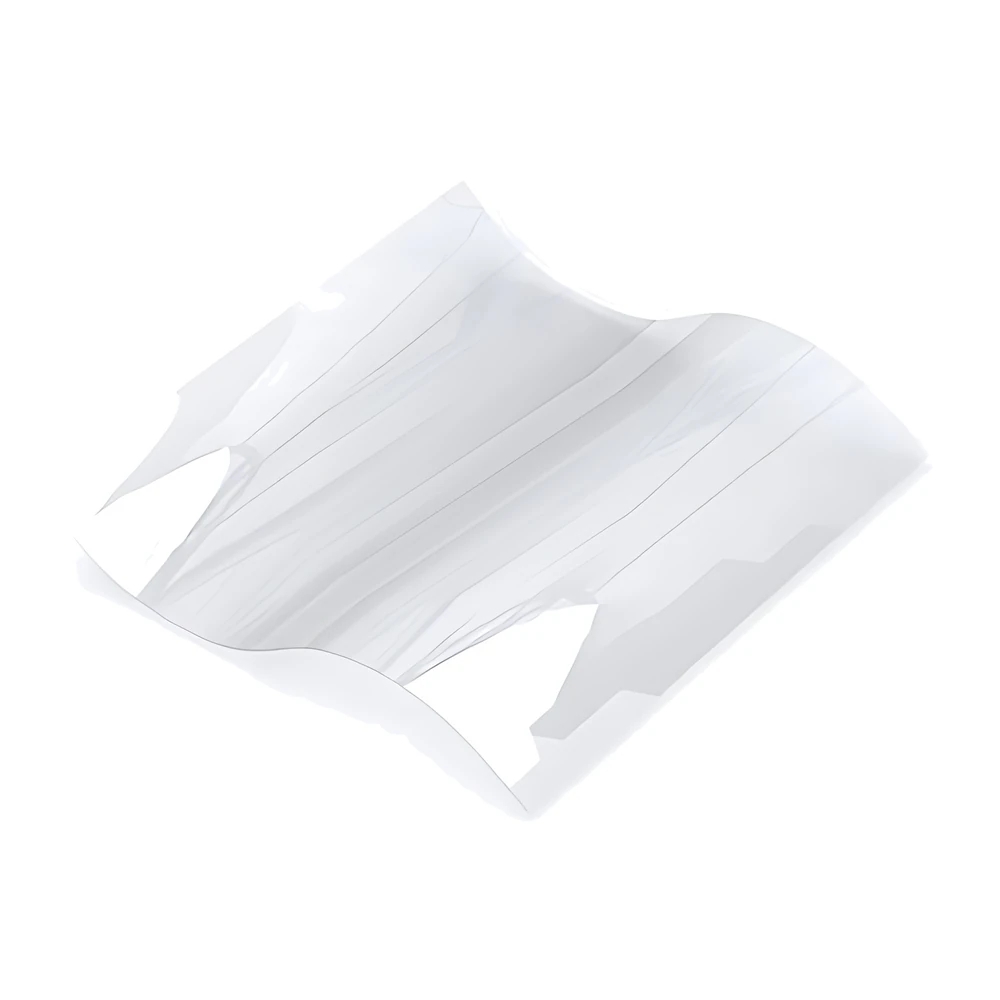
Nafion 115 is a perfluorosulfonic acid (PFSA) proton exchange membrane that conducts protons (H⁺) and other cations while separating the anode and cathode. It is extrusion-cast, nominally 127 µm (5 mil) thick, and supplied as a 100 × 100 mm sheet.
Thickness is a trade-off in the Nafion family: thin grades (212: 50.8 µm, 211: 25.4 µm) have lower resistance but are more delicate and allow more gas/fuel crossover; thick grades (115: 127 µm, 117: 183 µm) are more robust and limit crossover better, at higher ionic resistance. Nafion 115 is the medium-thick option among these four membranes: lower resistance than 117, more robust and less permeable than 212 and 211. It is a balanced choice for electrolysis and cell experiments that need a durable membrane that is easy to handle and cut.
| Membrane type | Proton (cation) exchange membrane, PFSA |
| Production method | Extrusion-cast |
| Nominal thickness | 127 µm (5 mil) |
| Basis weight | 250 g/m² (manufacturer data) |
| Conductivity | At least 0.10 S/cm (manufacturer data) |
| Acid capacity | Available at least 0.90 meq/g; total 0.95–1.01 meq/g |
| Water uptake | 38% (dry to water at 100 °C, 1 h; manufacturer data) |
| Wet expansion | Linear, about 10% (23 °C) – 15% (100 °C) |
| Tensile strength | 43 / 32 MPa (MD / TD, 50% RH, 23 °C) |
| Operating temperature | Conductivity falls if it dries out above about 80 °C |
| Form | Acid (H⁺) form (manufacturer data) |
| Size | 100 × 100 mm |


 Türkçe
 Engilish