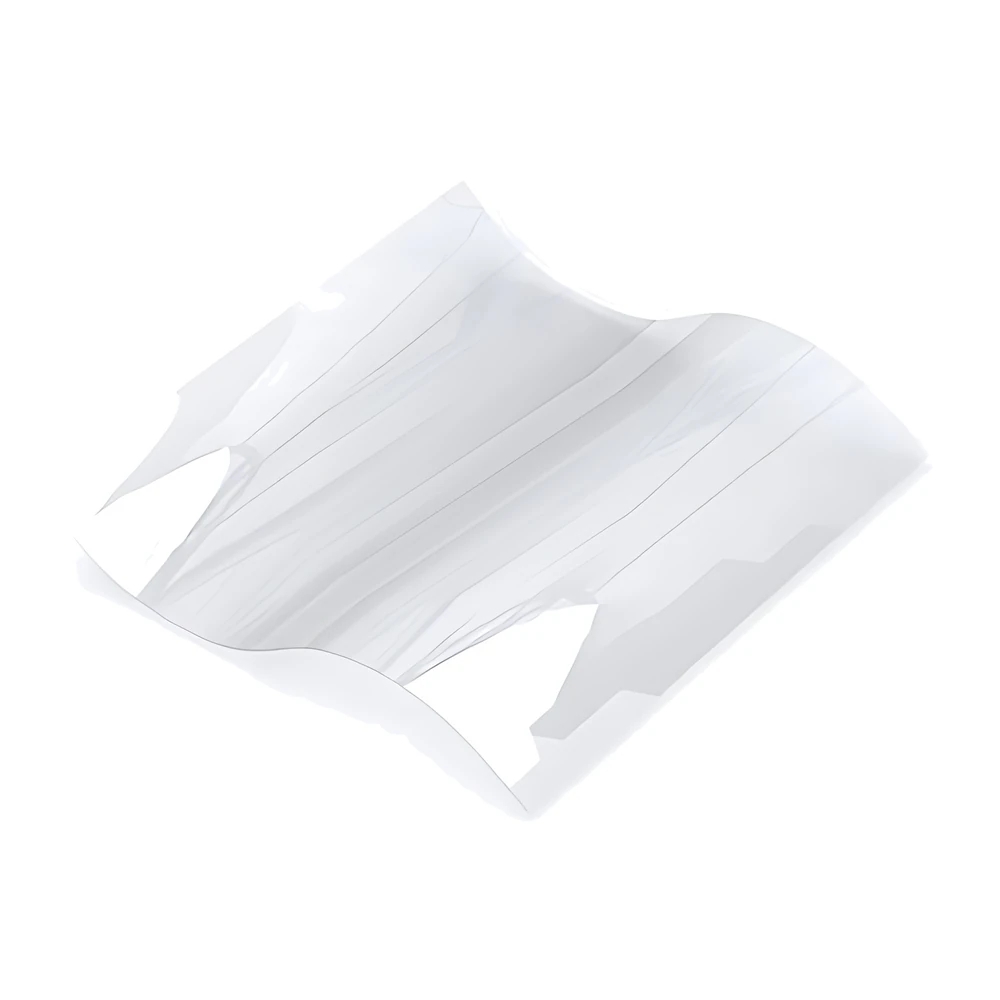
Nafion 211 (maker code NR211) is a thin perfluorosulfonic acid (PFSA) proton exchange membrane that conducts protons (H⁺) and other cations while separating the anode and cathode. It is solution-cast, nominally 25.4 µm (1 mil) thick, and supplied as a 100 × 100 mm sheet.
Thickness is a trade-off in the Nafion family: thin grades (212: 50.8 µm, 211: 25.4 µm) have lower resistance but are more delicate and allow more gas/fuel crossover; thick grades (115: 127 µm, 117: 183 µm) are more robust and limit crossover better, at higher ionic resistance. Nafion 211 is the thinnest membrane in this group: it has the lowest ionic resistance and suits fuel cell work aimed at high power density. In return it is the most delicate, and the maker's hydrogen crossover limit is twice that of Nafion 212. Handle it with care.
| Membrane type | Proton (cation) exchange membrane, PFSA |
| Production method | Solution (dispersion) cast, NR series |
| Nominal thickness | 25.4 µm (1 mil) |
| Basis weight | 50 g/m² (manufacturer data) |
| Acid capacity | Available at least 0.92 meq/g; total 0.95–1.01 meq/g |
| Hydrogen crossover | < 0.020 mL/min·cm² (22 °C, 100% RH, 50 psi differential; manufacturer data) |
| Water uptake | 50 ± 5% (manufacturer data) |
| Wet expansion | Linear, about 10% (23 °C) – 15% (100 °C) |
| Tensile strength | 23 / 28 MPa (MD / TD, manufacturer data) |
| Operating temperature | Conductivity falls if it dries out above about 80 °C |
| Form | Acid (H⁺) form (manufacturer data) |
| Size | 100 × 100 mm |


 Türkçe
 Engilish