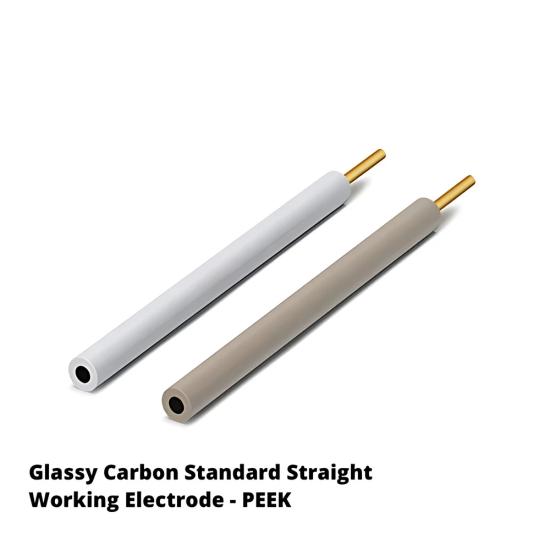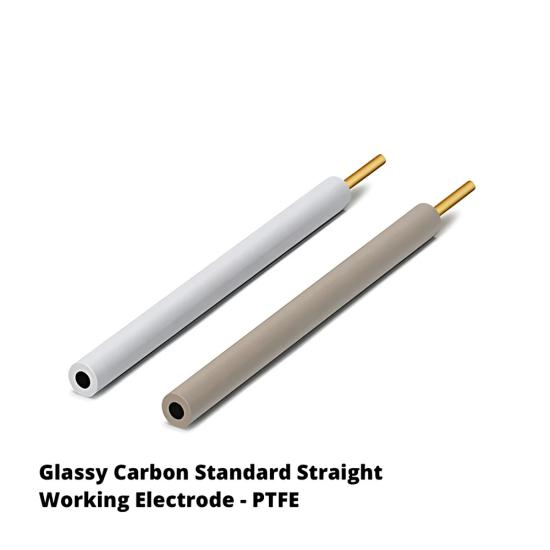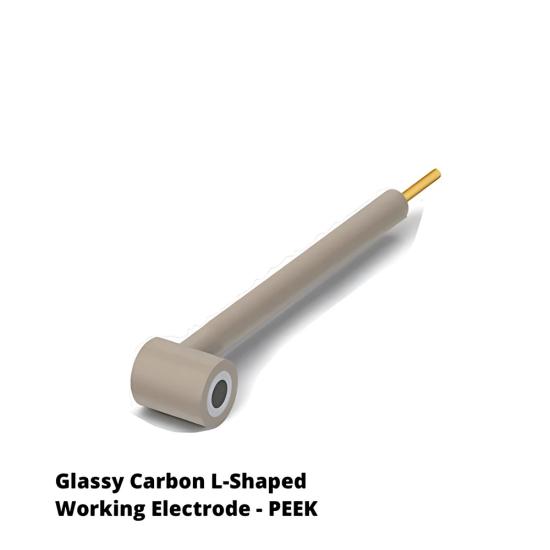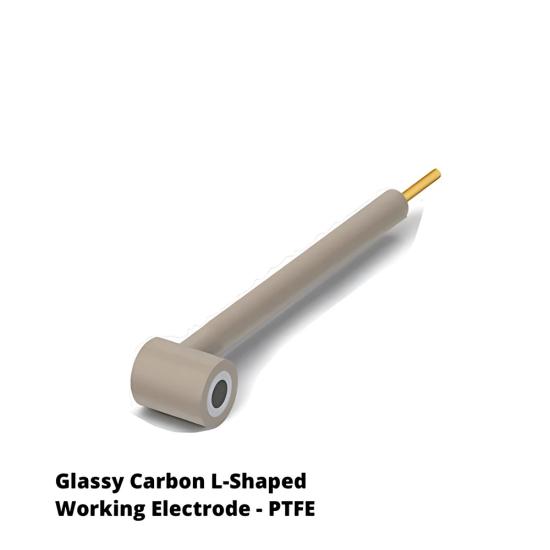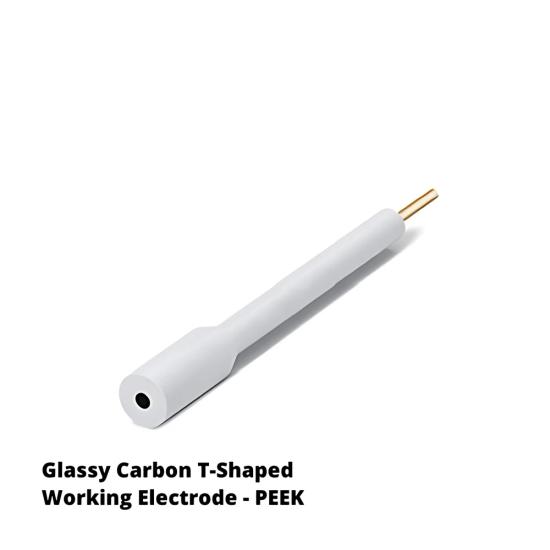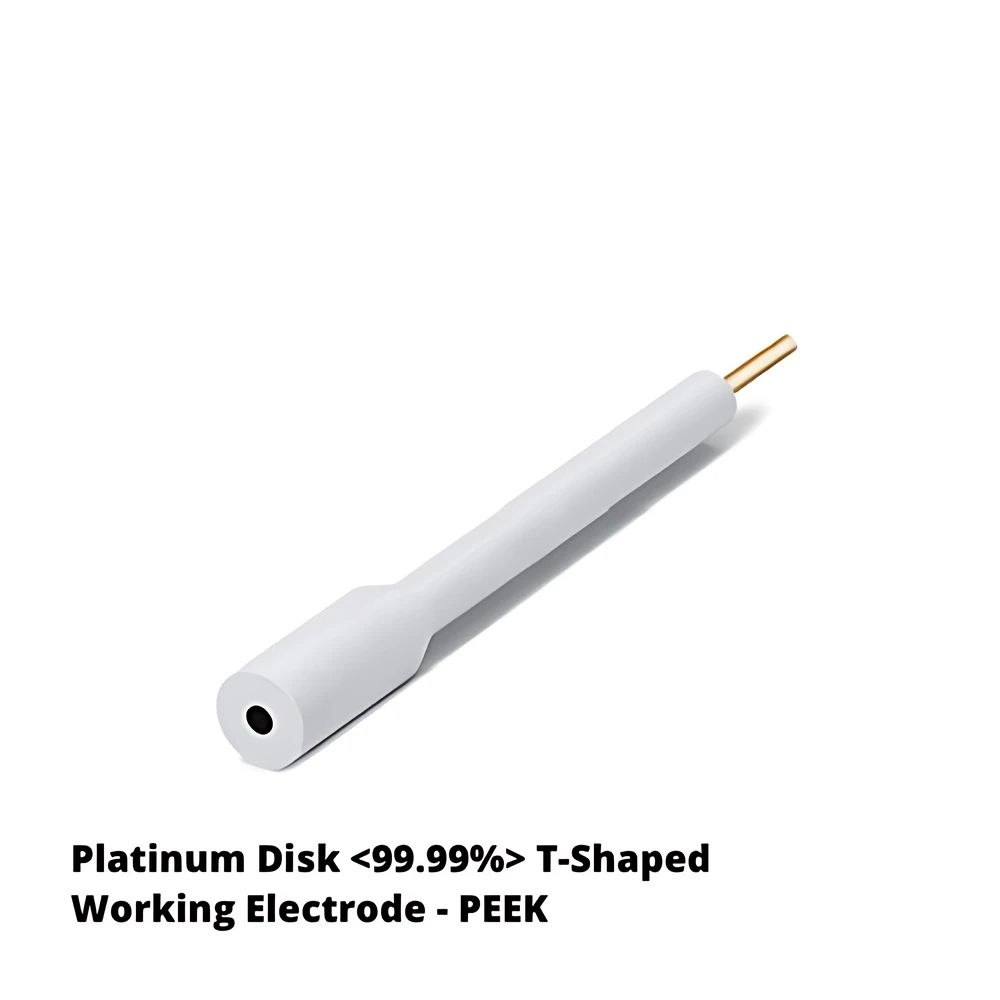
Measurements take place on a 99.99% pure platinum disk embedded in an insulating body. Platinum is a material used in surface electrochemistry: its distinct hydrogen adsorption wave makes it easy to follow the state of the surface by voltammetry. It serves as a comparison surface in electrocatalysis tests and is used to detect hydrogen peroxide and oxidants. Since hydrogen evolution starts at a low overpotential, the negative limit in aqueous media comes earlier than on carbon electrodes.
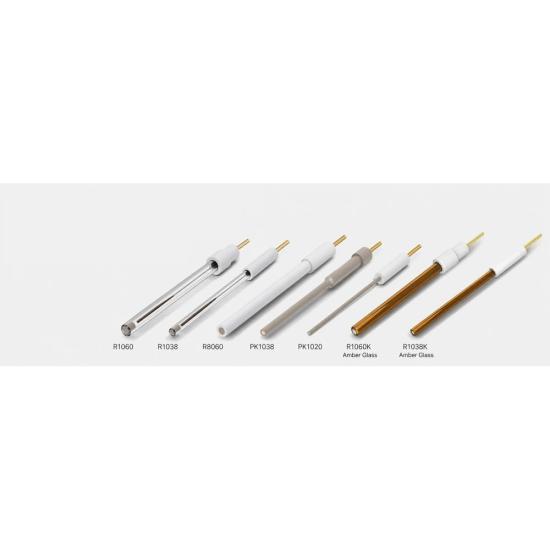
In the T-shaped model the lower section of the body is a wider cylinder, with the platinum disk on its end face. This shape is chosen to fit cells and holders designed for it; check your cell's electrode port before ordering. Disk diameters: Ø0.5–6 mm. The PEEK body is hard and creep-resistant. Straight and L-shaped types and a PTFE version are offered separately.
| Electrode type | Platinum disk working electrode |
| Electrode shape | T-shaped; lower body section is a wider cylinder, disk on its end face |
| Body material | PEEK (polyether ether ketone) |
| Disk material | Platinum, 99.99% |
| Disk diameter | 0.5, 1, 2, 3, 4, 5, 6 mm |
| Body / total length | 60 mm / ≈75 mm (manufacturer data) |
| Connection | Gold-plated pin |
| Potential window (aqueous) | Negative limit set by hydrogen evolution (low overpotential), positive limit by oxygen evolution; values depend on electrolyte and pH |
| Polishing | 1 µm diamond slurry on a nylon pad, then alumina on microcloth (final step 0.05 µm); rinse with pure water |
| Electrochemical cleaning | As an alternative to polishing, by potential cycling in a suitable electrolyte |
| Body chemical resistance | Resistant to most aqueous and organic media; not compatible with concentrated sulfuric acid, concentrated nitric acid or halogen acids such as HF, HBr, HI |
| Operating temperature | Not specified for this product. One electrode maker recommends 10–80 °C for similar PEEK-body disk electrodes; extreme temperatures can damage the disk–body seal |
| Diameter | Description |
| 0.5 mm | Ø0.5 mm platinum disk |
| 1 mm | Ø1 mm platinum disk |
| 2 mm | Ø2 mm platinum disk |
| 3 mm | Ø3 mm platinum disk |
| 4 mm | Ø4 mm platinum disk |
| 5 mm | Ø5 mm platinum disk |
| 6 mm | Ø6 mm platinum disk |
For sizes and specifications not listed above, you can request a custom quotation through the Quote Form.


 Türkçe
 Engilish