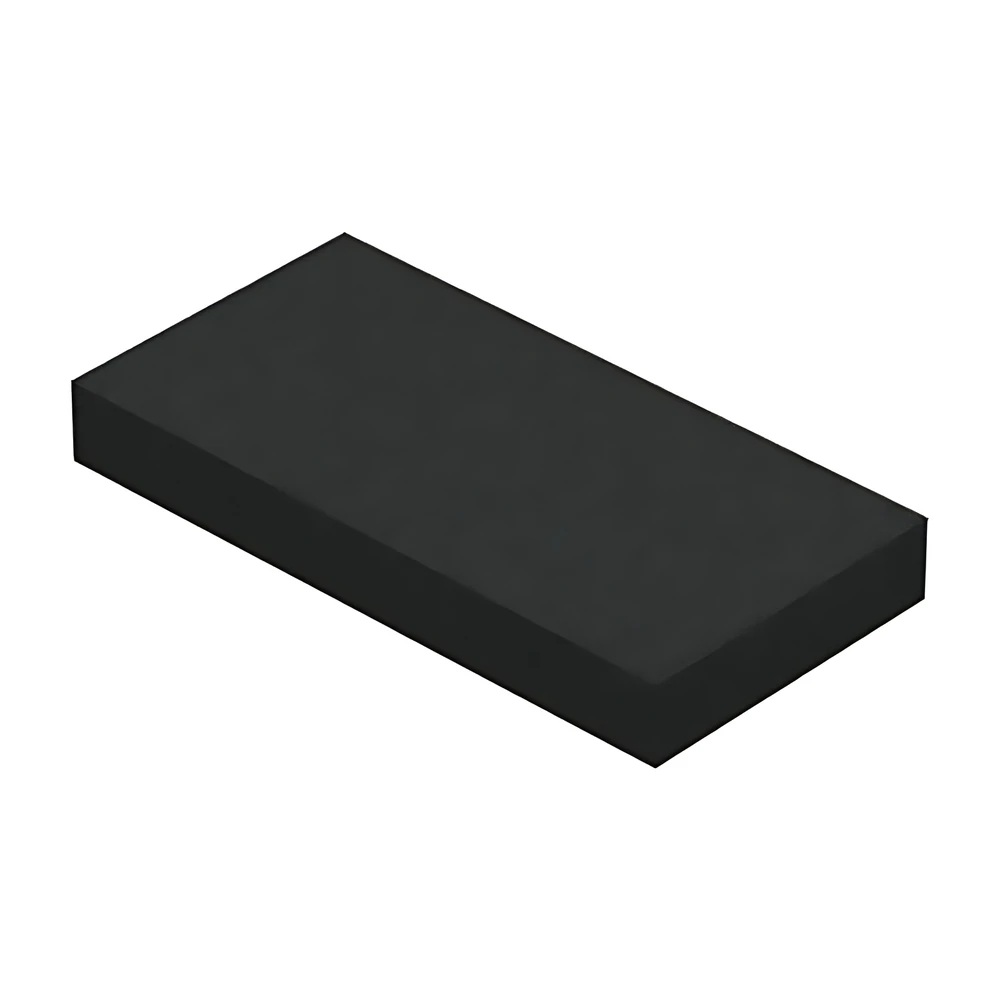
Reticulated vitreous carbon (RVC) is an open-pore, very light, electrically conductive three-dimensional foam made of glassy carbon. Its void fraction is about 90-97% depending on the maker and pore density, so it offers a very large surface area for its volume. The literature quotes about 65 cm² of surface per cm³ of volume for the 100 PPI grade.
When electrolyte is pumped through the foam (a flow-through cell), mass transport is very good, which is why it is preferred for metal ion removal, flow batteries and electrolysis of low-concentration species. This product is the 100 PPI (pores per inch) grade; the material is brittle and must be supported in use.
| Material | Reticulated vitreous carbon (RVC) foam |
| Pore density | 100 PPI (pores per inch) |
| Thickness | 10 mm |
| Sizes (width × length) | 100 × 50 mm, 100 × 100 mm |
| Void fraction (typical) | About 90-97% (depends on PPI and maker) |
| Surface area (100 PPI, literature) | About 65 cm²/cm³ |
| Bulk density (typical) | About 0.045 g/cm³ (about 3% solid; maker data) |
| Temperature limit in air | About 315 °C (significant oxidation above this) |
| Mechanical behavior | Brittle; must be supported in use |
| Typical configuration | Flow-through cell; electrolyte and current flow in the same direction |
| Size | Description |
| 100 × 50 × 10 mm | 100 PPI, 100 × 50 × 10 mm |
| 100 × 100 × 10 mm | 100 PPI, 100 × 100 × 10 mm |
For sizes and specifications not listed above, you can request a custom quotation through the Quote Form.


 Türkçe
 Engilish