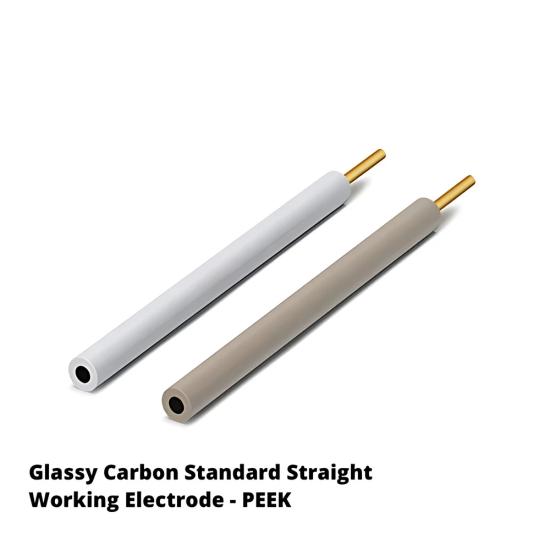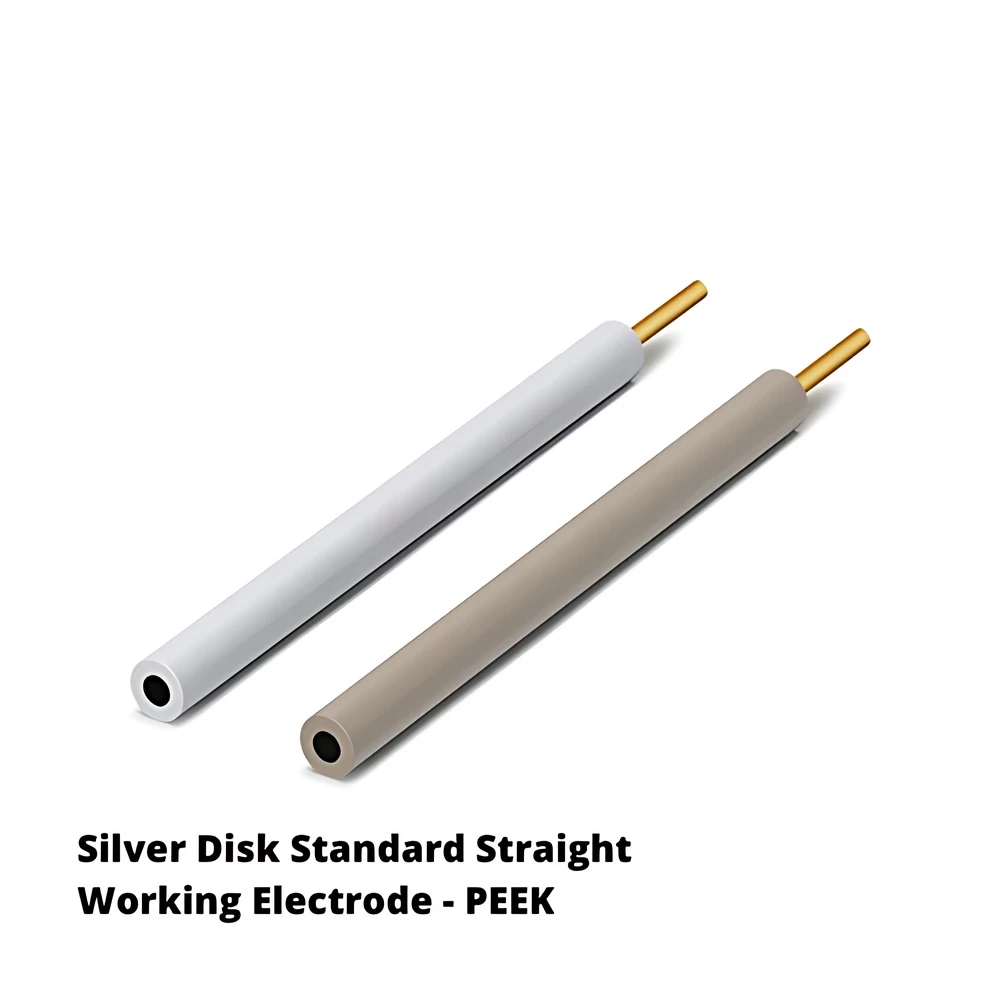
Measurements take place on a flat silver disk embedded in an insulating body. Silver is known as a catalyst with high selectivity toward carbon monoxide (CO) in the electrochemical reduction of carbon dioxide (CO₂RR), so it is used as a flat, well-defined silver surface in CO₂ reduction studies. In analytical electrochemistry it is also chosen for applications such as cyanide and sulfide determination.
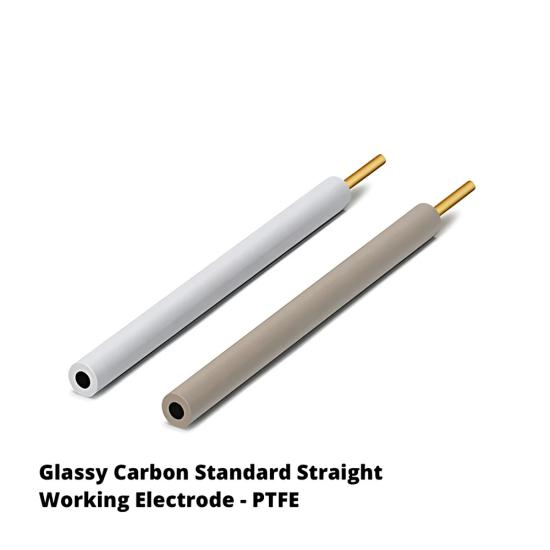
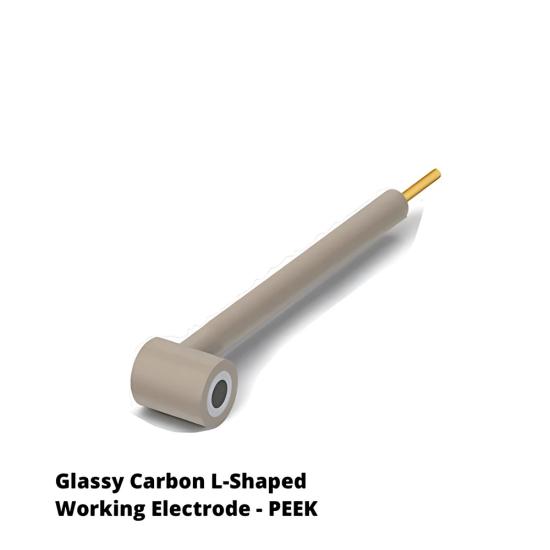
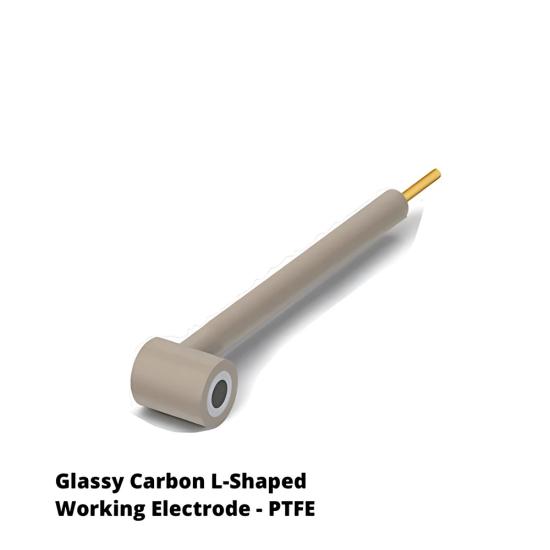
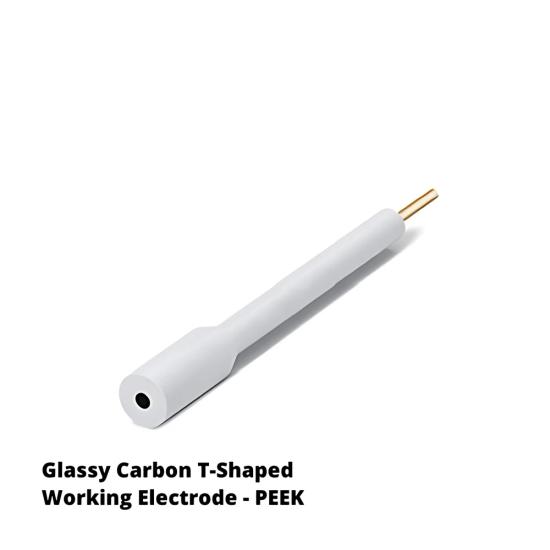
This is the standard straight type: the silver disk sits at the tip, in line with the PEEK rod, and the electrode is dipped vertically through the cell lid. Disk diameters: Ø2–6 mm. PEEK is hard and rigid and keeps its shape when the electrode is often refitted, but concentrated sulfuric and nitric acid damage it. L- and T-shaped types and a PTFE version are separate products.
| Electrode type | Silver disk working electrode |
| Electrode shape | Standard straight rod; disk on the end face, in line with the body axis |
| Body material | PEEK (polyether ether ketone) |
| Disk material | Silver |
| Disk diameter | 2, 3, 4, 5, 6 mm |
| Silver disk length | 5–10 mm (manufacturer data) |
| Body / total length | 60 mm / ≈75 mm (manufacturer data) |
| Connection | Gold-plated pin |
| Polishing | Alumina with pure water on microcloth for 1–2 minutes; rinse, and if needed ultrasonic cleaning for no more than 5 minutes |
| Body chemical resistance | Resistant to most aqueous and organic media; not compatible with concentrated sulfuric acid, concentrated nitric acid or halogen acids such as HF, HBr, HI |
| Operating temperature | Not specified for this product. One electrode maker recommends 10–80 °C for similar PEEK-body disk electrodes; extreme temperatures can damage the disk–body seal |
| Diameter | Description |
| 2 mm | Ø2 mm silver disk |
| 3 mm | Ø3 mm silver disk |
| 4 mm | Ø4 mm silver disk |
| 5 mm | Ø5 mm silver disk |
| 6 mm | Ø6 mm silver disk |
For sizes and specifications not listed above, you can request a custom quotation through the Quote Form.


 Türkçe
 Engilish