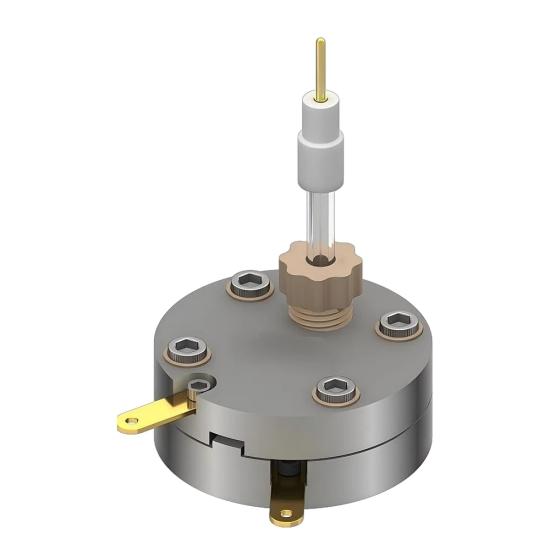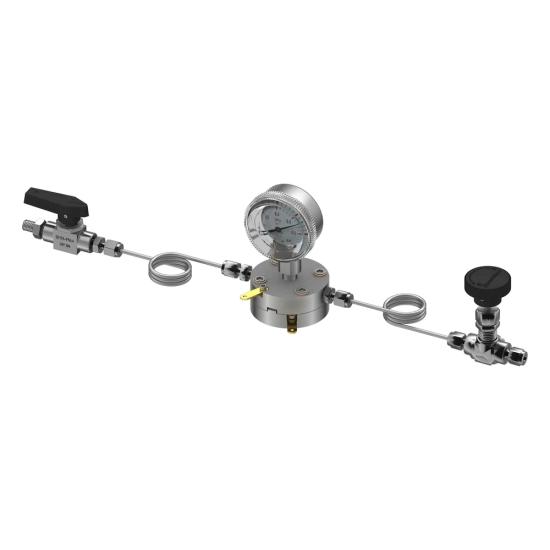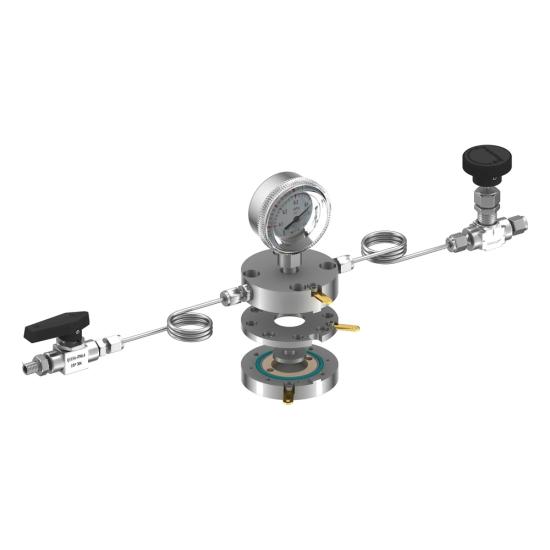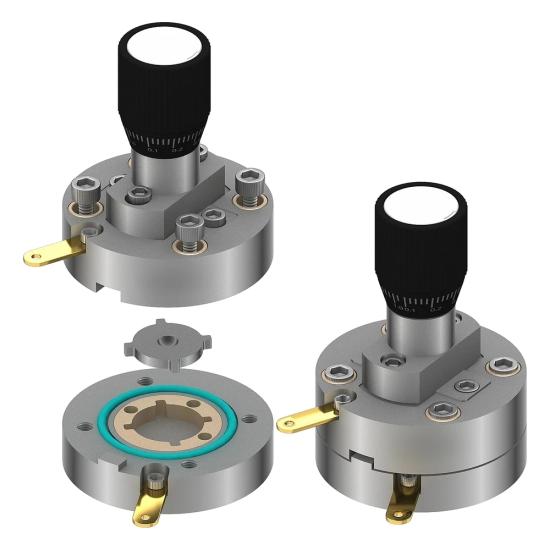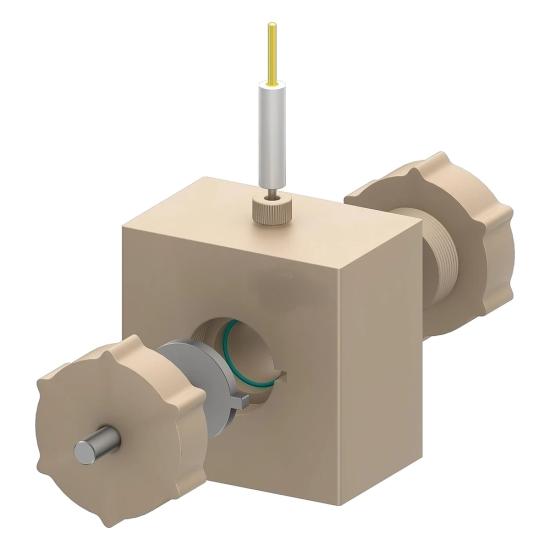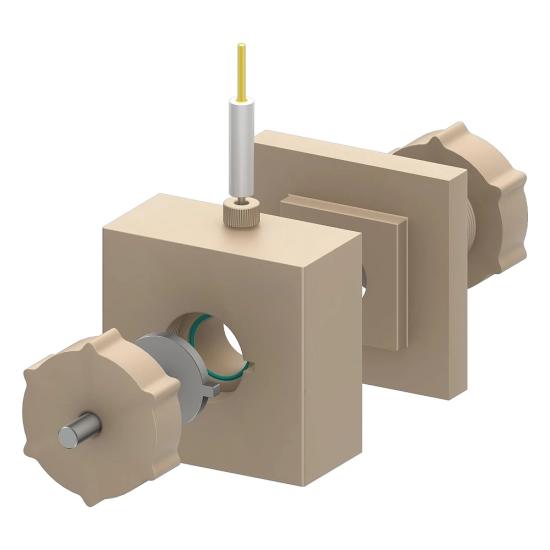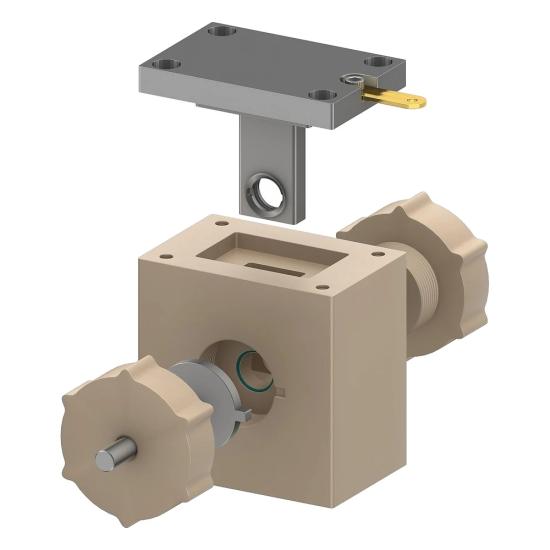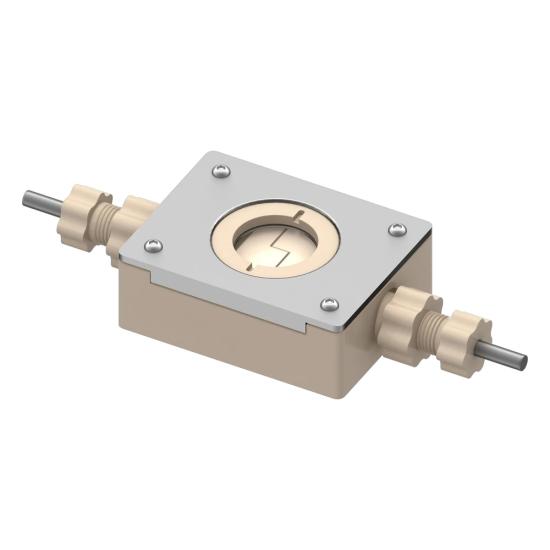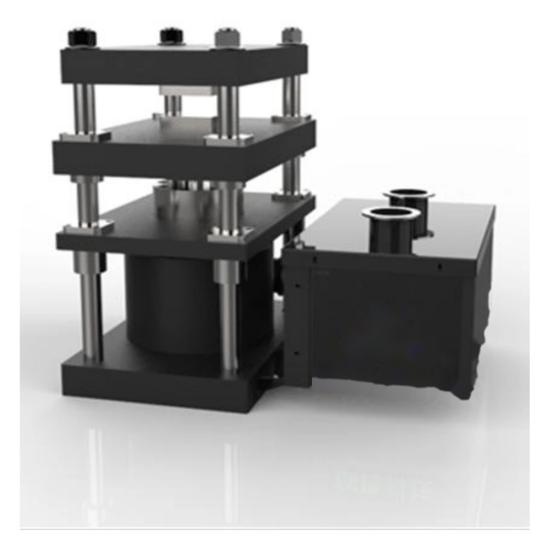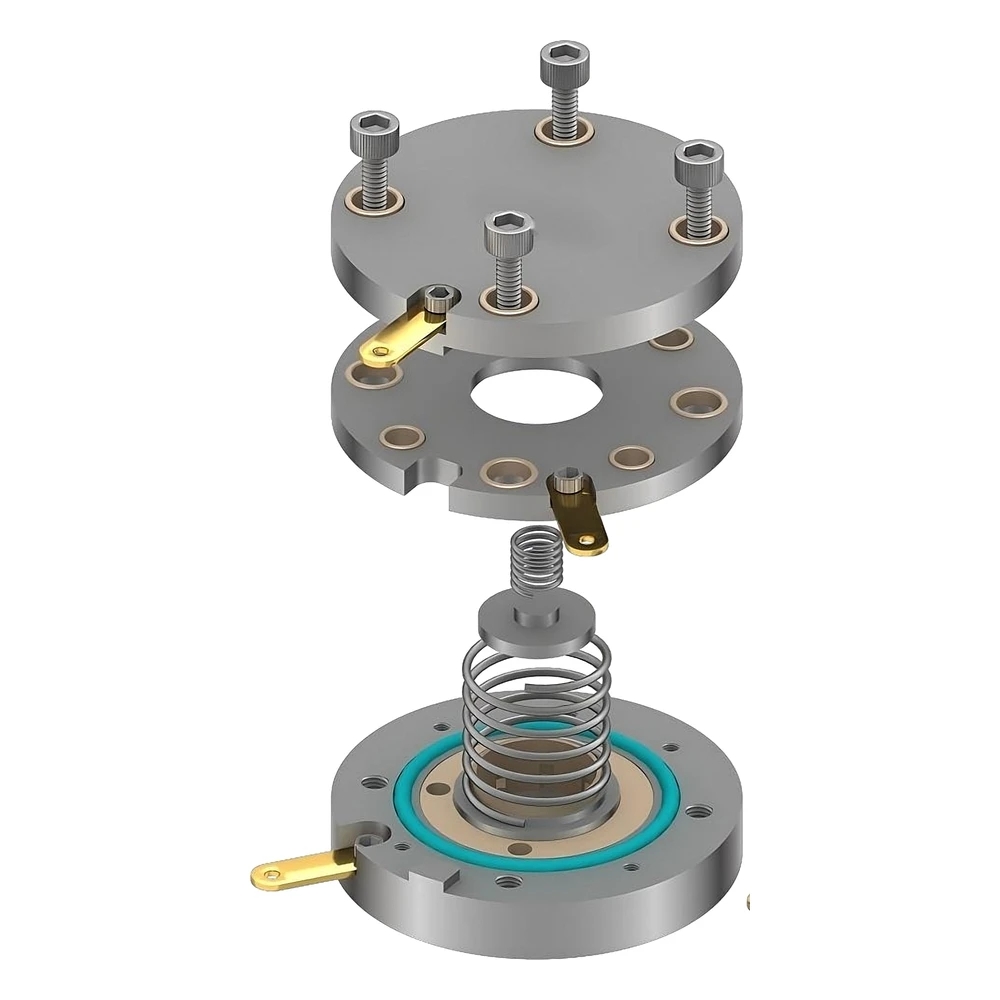
A version of the two-electrode titanium battery test cell with an added lithium reference electrode. The top and bottom plates are the current collectors for the positive and negative electrodes, and the middle plate is the reference current collector; a lithium wire is pressed against the middle plate by a large spring to form the reference circuit. In a three-electrode measurement the reference electrode lets the anode and cathode potentials be tracked separately, so you can tell which electrode limits cell performance and detect effects such as lithium plating or electrode polarization.
The body is high-purity titanium; the inner insulator is PEEK and the terminals are gold-plated copper. Chemically resistant O-rings and a screw-down lid keep the cell gas-tight, so it can be assembled in a glovebox and then tested outside. After testing, the cell is easily disassembled and cleaned without damaging the sample, so electrodes can be recovered for post-mortem analysis. The separator is supplied by the user.
| Electrode system | Three-electrode |
| Reference electrode | Lithium wire |
| Body material | High-purity titanium |
| Inner insulator | PEEK |
| Terminals | Gold-plated copper |
| Cell dimensions | Ø70 × 24 mm (manufacturer data) |
| Sample diameter | 20 mm |


 Türkçe
 Engilish